The Drum · Weekly AI news, freeSubscribe →
Share
AI is revolutionizing drug discovery by speeding up research and uncovering potential treatments for previously untreatable diseases, offering renewed hope to millions suffering from chronic illnesses.
In a world where medical breakthroughs are often the result of years of painstaking research, artificial intelligence (AI) is emerging as a powerful ally in the quest to develop new drugs. Recent advancements in AI technology have not only accelerated the drug discovery process but also opened up new avenues for treating diseases that were once considered intractable.
For many patients, the development of new treatments can mean the difference between life and death. Chronic conditions like cancer, Alzheimer's disease, and rare genetic disorders often require innovative solutions that traditional methods struggle to deliver. AI offers a beacon of hope by enabling researchers to analyze vast amounts of data more efficiently, identify potential drug candidates faster, and reduce the time it takes for these treatments to reach patients.
Imagine a library with millions of books, each containing unique information about potential drugs. Traditional methods would require scientists to read through each book one by one, a process that could take decades. With AI, researchers can use sophisticated algorithms to scan this vast library almost instantaneously, identifying promising leads in a fraction of the time.
One key application of AI in drug discovery is molecular modeling. This involves using computer simulations to predict how different molecules will interact with each other. By simulating these interactions, scientists can identify which molecules are most likely to bind to specific targets in the body, such as proteins associated with a particular disease. This process helps narrow down the number of potential drug candidates, saving both time and resources.
Another significant area where AI is making waves is data analysis. Biotech companies are generating massive amounts of data from various sources, including clinical trials, genetic studies, and patient records. AI algorithms can sift through this data to uncover patterns and insights that might be missed by human researchers. For example, AI can help identify subgroups of patients who are more likely to respond to a particular treatment, leading to more personalized medicine.
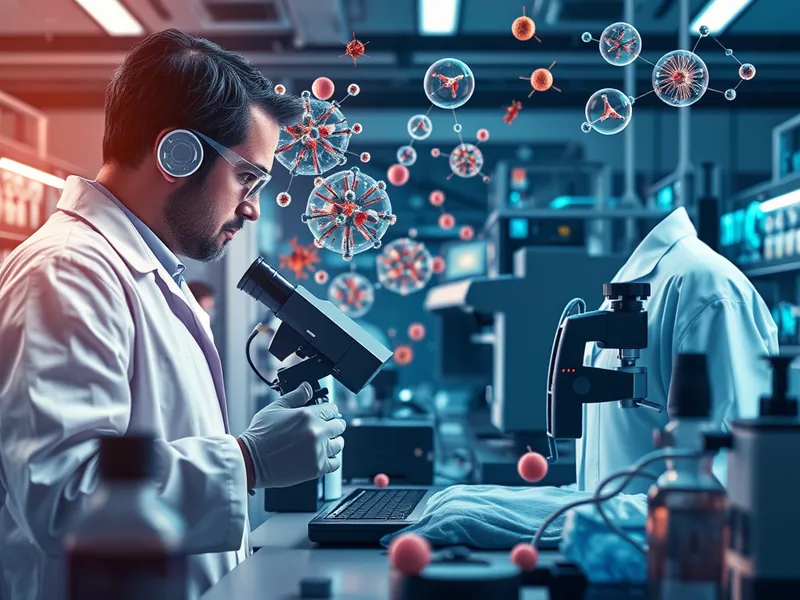
The benefits of AI in drug discovery are clear: faster development times, reduced costs, and the potential for more effective treatments. However, like any powerful tool, AI also comes with risks that must be carefully managed.
One concern is data privacy. As AI systems rely on large datasets, including sensitive patient information, there is a risk of data breaches or misuse. To mitigate this, stringent data protection measures and ethical guidelines are essential.
Another challenge is the potential for bias in AI algorithms. If the data used to train these algorithms is biased, the results can be skewed, leading to ineffective or even harmful treatments. Researchers must ensure that their datasets are diverse and representative of all patient populations to avoid this issue.
The long-term consequences of AI in drug discovery could be profound. As AI continues to evolve, it may become an integral part of the research process, leading to a new era of medical innovation. This could result in more targeted treatments, better outcomes for patients, and reduced healthcare costs.
However, it is also important to consider the broader societal implications. The integration of AI into drug discovery raises questions about access to these advanced technologies and the potential for widening health disparities. Policymakers and researchers must work together to ensure that the benefits of AI are equitably distributed.
AI is revolutionizing the field of drug discovery, offering new hope for patients and accelerating medical research. While there are challenges to overcome, the potential benefits are undeniable. By addressing these challenges head-on, we can harness the power of AI to improve public health and create a brighter future for all.
Tags
Original Sources
↗ https://www.goodnewsnetwork.org/more/legal
About the author
Amara's entry point into AI was an epidemiology role at a London research hospital, where she spent five years studying how digital health tools reached — or conspicuously failed to reach — underserved communities. Watching early algorithmic systems in healthcare quietly entrench existing inequalities, she redirected her career toward the systemic consequences of AI at scale. She covers AI through an unflinching lens: who benefits, who bears the cost, and what evidence actually says versus what the press release claims. Her writing is calm and precise, but she doesn't mistake balance for neutrality.
More from The Steward →This Week's Edition
29 April 2026
29 articles
Related Articles
Related Articles
More Stories
© 2026 Cedar & Bloom. All rights reserved.