The Drum · Weekly AI news, freeSubscribe →

Share
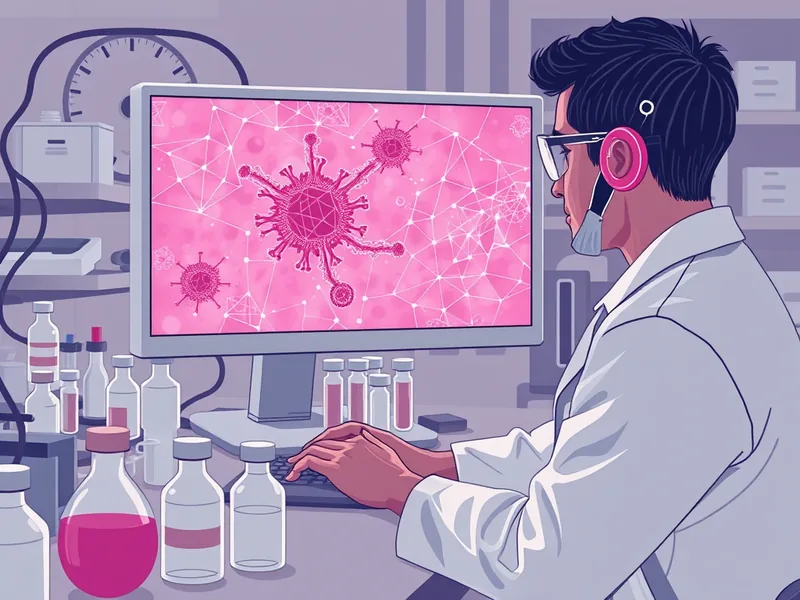
AI's rapid advancements are transforming drug discovery, slashing development times and costs while increasing the likelihood of finding effective treatments for previously intractable illnesses.
In a world where medical breakthroughs often take years of painstaking research and development, artificial intelligence (AI) is emerging as a game-changer. Recent advancements in AI are not only speeding up the drug discovery process but also making it more efficient and cost-effective. This shift has profound implications for public health, promising faster access to life-saving treatments.
For patients facing chronic or life-threatening diseases, time is of the essence. Traditional methods of drug development can take over a decade from initial research to market approval. During this period, many patients may not survive or might suffer significantly. AI has the potential to compress this timeline, potentially bringing new treatments to patients much sooner.
Imagine you're trying to find a specific needle in a massive haystack. That's what drug discovery often feels like for researchers. They must sift through countless chemical compounds to identify those with therapeutic potential. This process is time-consuming and resource-intensive, but AI can help by narrowing down the search.
AI algorithms can analyze vast datasets of chemical structures and biological interactions at a speed that would be impossible for humans. These algorithms use machine learning to predict which compounds are most likely to bind to specific targets in the body, such as proteins involved in disease processes. By focusing on these high-potential candidates, researchers can move more quickly into preclinical testing and clinical trials.
One notable example of AI's impact is the work being done by companies like Exscientia and Insilico Medicine. Exscientia recently announced that a drug candidate discovered using its AI platform entered human clinical trials in just 12 months-a fraction of the time typically required. Similarly, Insilico Medicine used AI to identify a novel target for idiopathic pulmonary fibrosis (IPF), a debilitating lung disease, and developed a drug candidate within 18 months.
The benefits of AI in drug discovery are clear: faster development times, reduced costs, and the potential to discover new treatments that might have been overlooked using traditional methods. However, there are also risks and challenges to consider.
One concern is the ethical use of data. AI systems require large datasets to train effectively, which often include sensitive patient information. Ensuring that this data is used responsibly and securely is crucial to maintaining public trust.
Another challenge is the potential for over-reliance on AI. While these tools are powerful, they should complement rather than replace human expertise. The complex nature of biological systems means that there will always be a need for human oversight and interpretation of results.
The long-term consequences of integrating AI into drug discovery could be transformative. Faster access to new treatments can improve patient outcomes and reduce healthcare costs. Additionally, the ability to identify novel targets and compounds could lead to breakthroughs in areas where traditional approaches have failed, such as certain cancers and neurodegenerative diseases.
However, it's important to address potential downsides, such as job displacement for researchers and the need for ongoing regulation to ensure that AI tools are used ethically and effectively. As with any technological advancement, a balanced approach is necessary to maximize benefits while minimizing risks.
AI is poised to revolutionize drug discovery, offering hope to patients and advancing public health. By accelerating the development of new treatments, these technologies have the potential to save lives and improve quality of life for millions of people. As we move forward, it's essential to continue investing in AI research while also addressing ethical and practical challenges.
Tags
Original Sources
↗ https://www.goodnewsnetwork.org/more/rss-feeds
About the author
Amara's entry point into AI was an epidemiology role at a London research hospital, where she spent five years studying how digital health tools reached — or conspicuously failed to reach — underserved communities. Watching early algorithmic systems in healthcare quietly entrench existing inequalities, she redirected her career toward the systemic consequences of AI at scale. She covers AI through an unflinching lens: who benefits, who bears the cost, and what evidence actually says versus what the press release claims. Her writing is calm and precise, but she doesn't mistake balance for neutrality.
More from The Steward →This Week's Edition
29 April 2026
29 articles
Related Articles
Related Articles
More Stories
© 2026 Cedar & Bloom. All rights reserved.