The Drum · Weekly AI news, freeSubscribe →

Share
Researchers have created an AI model that can predict lung cancer risk up to six years before symptoms emerge, potentially revolutionizing early detection and improving patient outcomes significantly.
Lung cancer is one of the most deadly forms of cancer, largely because it often goes undetected until it has reached an advanced stage. However, a groundbreaking new study offers hope for early detection and improved patient outcomes. Researchers have developed an artificial intelligence (AI) model that can predict the likelihood of lung cancer up to six years before symptoms appear.
Lung cancer is often diagnosed too late, when treatment options are limited and survival rates are low. According to the American Cancer Society, the five-year survival rate for people with localized lung cancer (cancer that has not spread) is about 60%. However, this drops dramatically to just 7% for those whose cancer has metastasized (spread to other parts of the body). Early detection can significantly improve these odds by allowing for earlier and more effective treatment.
The AI model, developed by a team of researchers from New York University's Grossman School of Medicine, uses a combination of machine learning and medical imaging data. Specifically, it analyzes CT scans of patients' lungs to identify subtle patterns that are associated with an increased risk of developing lung cancer.
To train the AI, the researchers used a dataset of over 17,000 chest CT scans from the National Lung Screening Trial (NLST). The NLST is a large-scale study that compared low-dose CT screening with chest X-rays for early detection of lung cancer. By analyzing these scans and cross-referencing them with patient outcomes, the AI learned to recognize specific features that are predictive of future lung cancer.
The results of the study, published in the journal Nature Medicine, are promising. The AI model was able to predict lung cancer up to six years before a clinical diagnosis was made. It achieved this by identifying changes in the lung tissue that are not visible to the human eye but are indicative of early-stage cancer.
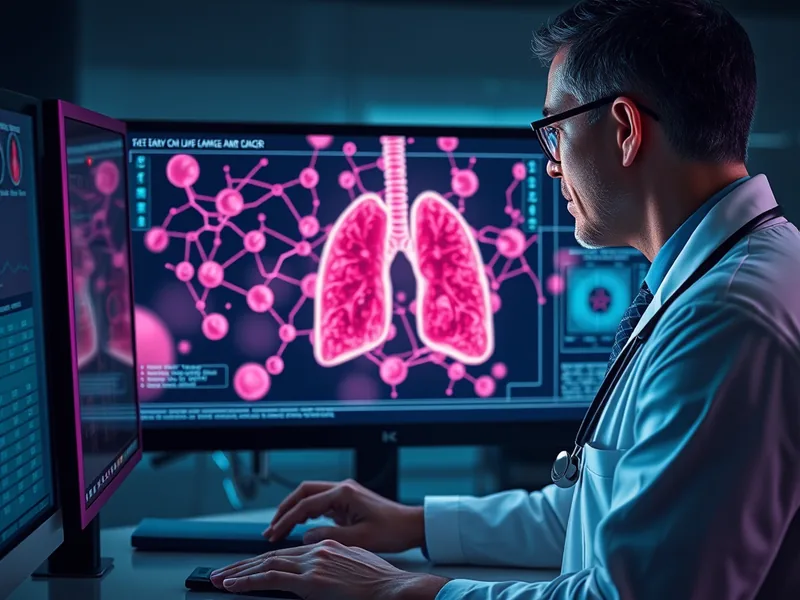
The potential benefits of this AI model are significant. By predicting lung cancer earlier, healthcare providers can intervene with screening and treatment at a stage when the disease is more treatable. This could lead to improved survival rates and better quality of life for patients.
Moreover, the model could help reduce unnecessary biopsies and other invasive procedures by providing more accurate risk assessments. It could also be used to identify high-risk individuals who might benefit from more frequent monitoring or lifestyle changes to lower their risk.
While the AI model shows great promise, there are several challenges that need to be addressed before it can be widely implemented in clinical settings. One of the primary concerns is ensuring that the model is accurate and reliable across diverse populations. The initial dataset used to train the AI was primarily composed of white patients, which may limit its effectiveness for other racial and ethnic groups.
Additionally, there are ethical considerations around the use of AI in healthcare. It's important to ensure that the technology is transparent, explainable, and does not perpetuate existing health disparities. Healthcare providers will also need to be trained on how to interpret and act on the predictions made by the AI.
The development of this AI model represents a significant step forward in the fight against lung cancer. As researchers continue to refine and validate the technology, it has the potential to transform early detection and improve patient outcomes. However, ongoing research and collaboration will be essential to address the challenges and ensure that the benefits are accessible to all.
Tags
Original Sources
About the author
Amara's entry point into AI was an epidemiology role at a London research hospital, where she spent five years studying how digital health tools reached — or conspicuously failed to reach — underserved communities. Watching early algorithmic systems in healthcare quietly entrench existing inequalities, she redirected her career toward the systemic consequences of AI at scale. She covers AI through an unflinching lens: who benefits, who bears the cost, and what evidence actually says versus what the press release claims. Her writing is calm and precise, but she doesn't mistake balance for neutrality.
More from The Steward →This Week's Edition
29 April 2026
29 articles
Related Articles
Related Articles
More Stories
© 2026 Cedar & Bloom. All rights reserved.