The Drum · Weekly AI news, freeSubscribe →

Share
AI-powered robots are transforming the way we manage waste, significantly increasing recycling rates and reducing environmental damage from landfills and pollution.
Every year, millions of tons of waste are generated globally, much of which ends up in landfills or the environment. But a new wave of innovation is changing how we handle our trash. AI-powered robots are now playing a crucial role in sorting and recycling waste, making the process more efficient and sustainable.
The stakes are high when it comes to waste management. Landfills not only take up valuable space but also release harmful greenhouse gases like methane. Additionally, improper disposal of hazardous materials can contaminate soil and water, posing serious health risks to communities. By improving recycling rates, AI-powered robots help reduce these environmental and public health threats.
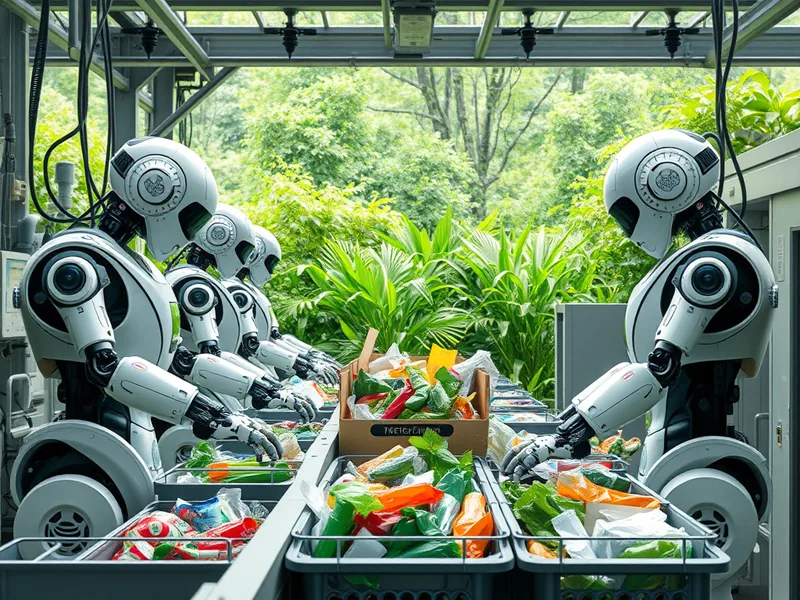
Imagine a conveyor belt filled with various types of waste-plastic bottles, glass jars, paper, and more. In traditional recycling facilities, human workers sort through this material by hand, a process that is both labor-intensive and prone to errors. Enter AI-powered robots, which use advanced cameras and machine learning algorithms to identify and sort different materials with remarkable accuracy.
These robots are equipped with sensors and robotic arms that can pick out specific items from the waste stream. For example, they can distinguish between different types of plastics based on their chemical composition or color. This level of precision is crucial because contaminants in recycling streams can render entire batches useless, leading to higher costs and less effective recycling.
The benefits of AI-powered robots in waste management are manifold. First, they significantly increase sorting efficiency. While human workers might sort through 40 items per minute, these robots can handle hundreds or even thousands of items in the same time frame. This means more materials can be recycled, reducing the amount of waste sent to landfills.
Second, the accuracy of AI-powered sorting is unparalleled. These robots can detect and remove contaminants that human eyes might miss, ensuring that recycling streams remain clean and usable. This not only improves the quality of recycled materials but also reduces the costs associated with contamination.
Third, these systems are cost-effective in the long run. While the initial investment in AI technology can be high, the operational savings from increased efficiency and reduced labor costs make it a worthwhile investment for many waste management facilities.
Despite the clear advantages, there are also challenges to consider. The deployment of AI-powered robots requires significant upfront investment, which may be prohibitive for smaller or underfunded facilities. Additionally, there is a need for ongoing maintenance and software updates to keep these systems running smoothly.
Another concern is the potential impact on jobs. As more tasks become automated, there is a risk that human workers could be displaced. However, many experts argue that these technologies can create new job opportunities in areas such as robotics engineering, data analysis, and system maintenance.
The integration of AI-powered robots into waste management systems represents a significant step towards a more sustainable future. By improving recycling rates and reducing contamination, these technologies help conserve natural resources and reduce the environmental impact of waste disposal. Moreover, they set the stage for further innovations in waste management, such as the development of new materials that are easier to recycle or biodegrade.
As we continue to grapple with the challenges of waste management, AI-powered robots offer a promising solution. They not only make the process more efficient and accurate but also contribute to a cleaner, greener planet. By investing in these technologies, we can take important steps towards a more sustainable future for all.
Tags
Original Sources
About the author
Amara's entry point into AI was an epidemiology role at a London research hospital, where she spent five years studying how digital health tools reached — or conspicuously failed to reach — underserved communities. Watching early algorithmic systems in healthcare quietly entrench existing inequalities, she redirected her career toward the systemic consequences of AI at scale. She covers AI through an unflinching lens: who benefits, who bears the cost, and what evidence actually says versus what the press release claims. Her writing is calm and precise, but she doesn't mistake balance for neutrality.
More from The Steward →This Week's Edition
29 April 2026
29 articles
Related Articles

Nuclear Plants Are Squeezing Out More Power, But It Won't Be Enough to Meet AI's Demand
Environment & Climate · 5 min

The Hidden Environmental Price Tag of Artificial Intelligence
Environment & Climate · 5 min

Iambic Therapeutics Raises $150 Million in IPO to Fund AI-Designed Cancer Drugs
Finance & Markets · 5 min
Related Articles
Nuclear Plants Are Squeezing Out More Power, But It Won't Be Enough to Meet AI's Demand
Environment & Climate · 5 min
The Hidden Environmental Price Tag of Artificial Intelligence
Environment & Climate · 5 min
Iambic Therapeutics Raises $150 Million in IPO to Fund AI-Designed Cancer Drugs
Finance & Markets · 5 min
More Stories
© 2026 Cedar & Bloom. All rights reserved.
