The Drum · Weekly AI news, freeSubscribe →

Share
As Alberta and Ottawa tout their grand climate agreements, critics argue that the Pathways carbon capture project is more about rolling back regulations than reducing emissions.
The promise of a cleaner future in Alberta’s oil sands seemed within reach when Premier Danielle Smith and Prime Minister Mark Carney announced their November 2025 Memorandum of Understanding (MOU). The agreement included plans for the Pathways Alliance to develop an ambitious carbon capture and storage (CCS) project. However, as details have emerged, it appears that the grand bargain may be more about loosening environmental regulations than delivering on climate action.
Critics argue that instead of making significant strides in reducing greenhouse gas emissions, the Oil Sands Alliance is pressuring the federal government to roll back key environmental protections. And, according to recent developments, Ottawa seems to be acquiescing to these demands. This shift raises serious questions about the true intentions behind the Pathways project and the broader implications for Canada’s climate commitments.
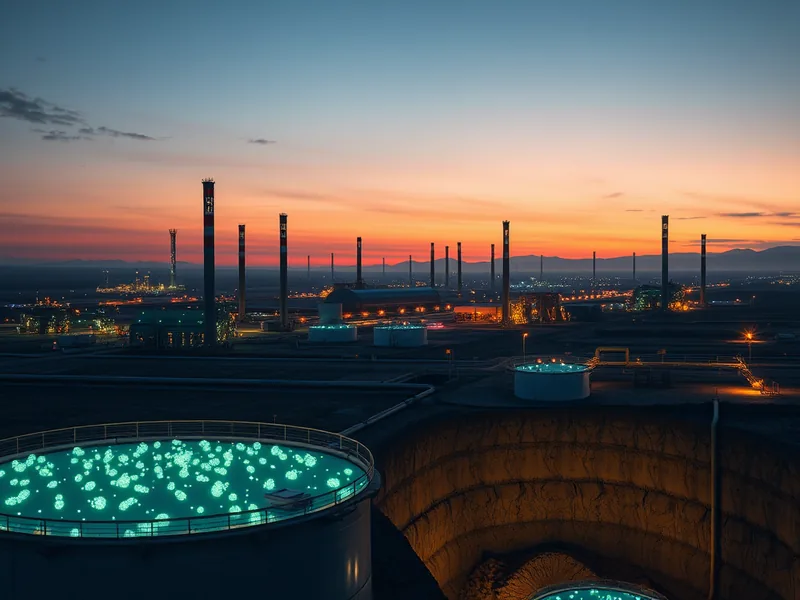
The Pathways Alliance, a coalition of major oil sands producers, has long touted its carbon capture and storage (CCS) technology as a key solution to reducing emissions from the oil and gas sector. The idea is simple: capture carbon dioxide emissions at their source and store them underground, preventing them from entering the atmosphere and contributing to global warming.
However, the reality of implementing such a project is far more complex. Critics point out that the Pathways Alliance has been slow to deliver on its promises, with little concrete progress made on the ground. Meanwhile, the alliance continues to push for regulatory rollbacks that would make it easier to continue business as usual in the oil sands.
Environmental groups argue that these rollbacks are not only counterproductive but also undermine Canada’s international climate commitments under the Paris Agreement. The lack of transparency and accountability surrounding the Pathways project has further fueled skepticism among those who believe that the initiative is more about public relations than genuine environmental action.
The stakes are high for both the environment and the economy. If the Pathways Alliance fails to deliver on its CCS promises, it could set a dangerous precedent for other industries looking to greenwash their operations without making meaningful changes. The potential rollback of environmental regulations could lead to increased emissions and further damage to Canada’s natural ecosystems.
For the public, this means that the health and well-being of communities near oil sands operations could be at risk. Air and water quality issues, already a concern in these areas, could worsen if regulatory protections are weakened. The economic benefits promised by the Pathways project-such as job creation and technological innovation-may never materialize if the initiative is primarily focused on maintaining the status quo.
In the end, the success or failure of the Pathways carbon capture project will have far-reaching consequences for Canada’s ability to meet its climate goals. As stakeholders continue to debate the merits of the project, one thing is clear: the path forward must be transparent, accountable, and truly committed to reducing emissions and protecting the environment.
Tags
Original Sources
The Pathways Alliance Carbon Capture Project Was Always a Boondoggle
↗ https://www.desmog.com/2026/05/20/the-pathways-alliance-carbon-capture-project-was-always-a-boondoggle
About the author
Amara's entry point into AI was an epidemiology role at a London research hospital, where she spent five years studying how digital health tools reached — or conspicuously failed to reach — underserved communities. Watching early algorithmic systems in healthcare quietly entrench existing inequalities, she redirected her career toward the systemic consequences of AI at scale. She covers AI through an unflinching lens: who benefits, who bears the cost, and what evidence actually says versus what the press release claims. Her writing is calm and precise, but she doesn't mistake balance for neutrality.
More from The Steward →This Week's Edition
22 May 2026
29 articles
Related Articles

Nuclear Plants Are Squeezing Out More Power, But It Won't Be Enough to Meet AI's Demand
Environment & Climate · 5 min

The Hidden Environmental Price Tag of Artificial Intelligence
Environment & Climate · 5 min

Iambic Therapeutics Raises $150 Million in IPO to Fund AI-Designed Cancer Drugs
Finance & Markets · 5 min
Related Articles
Nuclear Plants Are Squeezing Out More Power, But It Won't Be Enough to Meet AI's Demand
Environment & Climate · 5 min
The Hidden Environmental Price Tag of Artificial Intelligence
Environment & Climate · 5 min
Iambic Therapeutics Raises $150 Million in IPO to Fund AI-Designed Cancer Drugs
Finance & Markets · 5 min
More Stories
© 2026 Cedar & Bloom. All rights reserved.
