The Drum · Weekly AI news, freeSubscribe →

Share
Scientists have developed a brain-computer interface that converts thoughts into written sentences, offering paralyzed patients a new way to communicate freely and independently.
For individuals living with paralysis, communication can be a significant challenge. However, a recent breakthrough in brain-computer interface (BCI) technology has brought new hope to those who are unable to speak or write due to their condition. Researchers have successfully translated the brain waves of a paralyzed man into sentences on a computer, marking a significant step forward in medical and technological innovation.
The study, conducted by researchers at the University of California, San Francisco (UCSF), focused on a 36-year-old man who has been living with paralysis for over a decade. The team implanted electrodes directly onto his brain's surface to capture neural signals associated with speech. These signals were then processed using advanced algorithms to convert them into text.
Dr. Edward Chang, the lead researcher and a neurosurgeon at UCSF, explained that the goal was to create a system that could translate the patient’s thoughts into words without requiring physical movement. "This is a major step toward developing communication tools for people who have lost the ability to speak," he said.
The technology works by mapping the specific brain activity patterns that occur when someone thinks about speaking. The electrodes pick up these patterns, and machine learning algorithms analyze them to predict the intended speech. Over time, the system becomes more accurate as it learns from the user's brain signals.
One of the most significant aspects of this research is its potential to improve quality of life for individuals with severe paralysis. For the participant in the study, who has been unable to communicate through traditional means since his injury, the ability to form sentences on a computer screen represents a profound change. "It’s like regaining a part of myself that I thought was lost forever," he shared.
The implications extend beyond personal communication. This technology could also be used in various other applications, such as controlling smart home devices or navigating online platforms, further enhancing independence and autonomy for users.
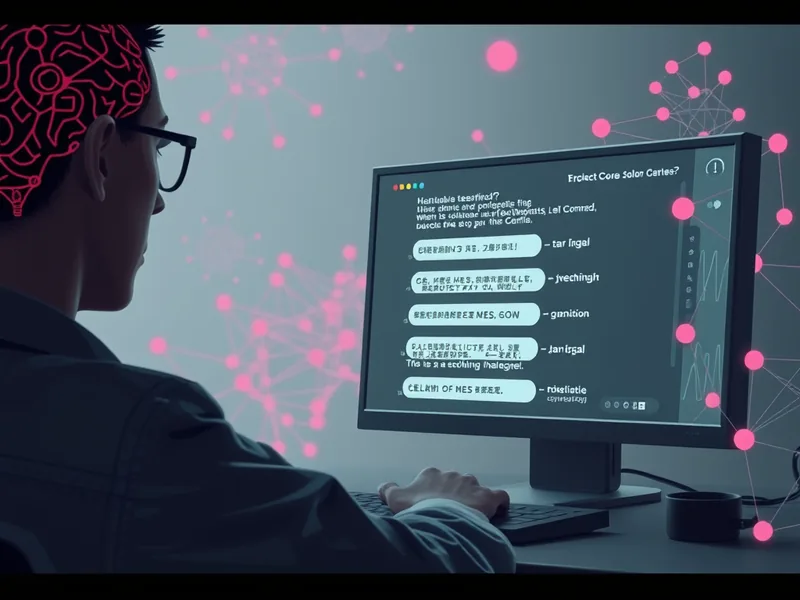
However, the researchers are quick to note that this is still an early-stage development. While the current system has shown promising results, it requires extensive calibration and can only interpret a limited vocabulary. Dr. Chang emphasized the need for ongoing research to refine the technology and expand its capabilities.
"We’re excited about the potential of this technology, but we also recognize that there’s much more work to be done," he said. "Our next steps include improving the accuracy and speed of the system, as well as making it more user-friendly."
The ethical considerations surrounding BCIs are also important. As these technologies become more advanced, questions about privacy, consent, and the potential for misuse will need to be addressed. Dr. Chang and his team are committed to developing guidelines that ensure the safe and responsible use of BCI technology.
For now, the breakthrough offers a glimpse into a future where individuals with paralysis can communicate more freely and participate more fully in daily life. The research not only highlights the power of interdisciplinary collaboration between neuroscience and AI but also underscores the importance of innovation driven by human needs.
As the technology continues to evolve, it holds the promise of transforming lives for the better, one word at a time.
Tags
Original Sources
About the author
Amara's entry point into AI was an epidemiology role at a London research hospital, where she spent five years studying how digital health tools reached — or conspicuously failed to reach — underserved communities. Watching early algorithmic systems in healthcare quietly entrench existing inequalities, she redirected her career toward the systemic consequences of AI at scale. She covers AI through an unflinching lens: who benefits, who bears the cost, and what evidence actually says versus what the press release claims. Her writing is calm and precise, but she doesn't mistake balance for neutrality.
More from The Steward →This Week's Edition
29 April 2026
29 articles
Related Articles
Related Articles
More Stories
© 2026 Cedar & Bloom. All rights reserved.