The Drum · Weekly AI news, freeSubscribe →

Share
A Georgia county's struggle with a greedy data center reveals the urgent need for stricter regulations and real-time monitoring to prevent environmental harm and protect residents' daily needs.
In a small Georgia county, residents faced unexpected water pressure drops and strict usage restrictions while a nearby data center consumed nearly 30 million gallons of water without paying. The incident in Fayette County serves as a stark reminder of the potential environmental and social consequences when local governments rush to approve large-scale data center projects without adequate infrastructure updates.
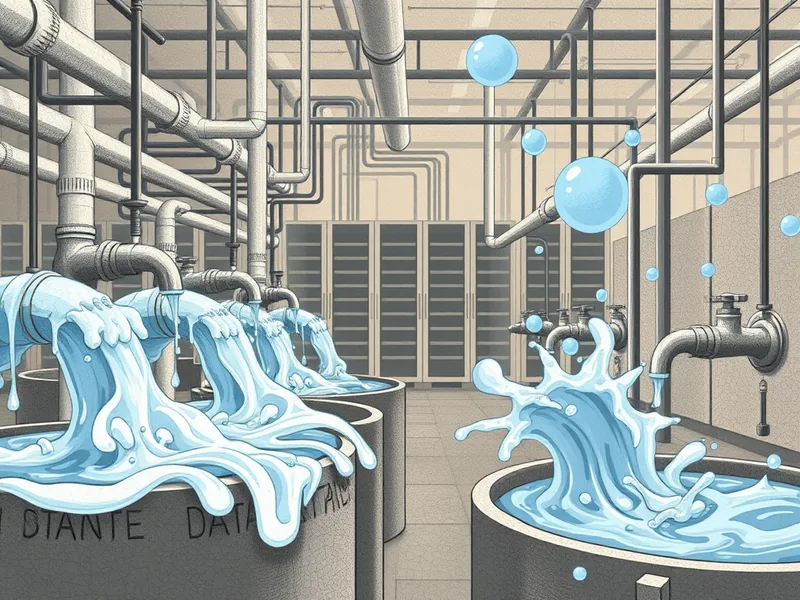
On Friday, Politico reported that Quality Technology Services (QTS), one of the country’s largest data center developers, used an astounding 30 million gallons of water without being billed. The water usage was particularly concerning because it occurred during a period when local residents were already facing drought conditions and were advised to limit their personal water consumption.
Utility officials in Fayette County discovered that QTS had two industrial-scale water connections, one of which was installed without the utility's knowledge and another that wasn't linked to the company’s billing account. This oversight allowed the data center to use massive amounts of water without any immediate financial consequences. Eventually, QTS paid about $150,000 for the water, but no fines were imposed.
The root of the problem lies in Fayette County's outdated water metering system and understaffed utility department. Vanessa Tigert, the county’s water system director, explained that the transition to a smart, cloud-based system was meant to improve monitoring and detect leaks more efficiently. However, the county’s limited resources made it difficult to keep up with the demands of such a large data center.
“Only one worker is available to inspect meters, and they are spread pretty thin,” Tigert told Politico. This lack of oversight allowed QTS to use far more water than expected without immediate detection or consequences.
QTS has maintained that its water usage was in compliance with all regulations. In a statement to Ars Technica, the company said, “Once this billing issue was flagged, QTS paid all charges. All water usage followed relevant and applicable regulations.” The company also pointed to statements from county officials denying residents’ claims that the facility’s excess water usage had decreased water pressure across the county system.
Despite these assurances, many residents remain frustrated. They argue that the data center's water consumption has had a tangible impact on their daily lives, especially during times of drought. The incident highlights the need for more robust monitoring systems and stricter enforcement of water use limits, particularly in regions prone to water scarcity.
This case in Fayette County is not an isolated incident. As data centers continue to expand across the United States, many local governments are approving these developments without fully considering the environmental and social impacts. The rapid growth of data centers, driven by the increasing demand for cloud services and data storage, puts a significant strain on local water resources.
The lack of proper monitoring and enforcement can lead to situations where large industrial users consume disproportionate amounts of water, exacerbating existing resource constraints and potentially harming local communities. It is crucial for local governments to update their infrastructure and regulatory frameworks to ensure that these developments are sustainable and equitable.
Ultimately, the incident in Fayette County serves as a wake-up call for policymakers and residents alike. It underscores the importance of balanced development practices that prioritize both economic growth and environmental stewardship. As data centers become more prevalent, it is essential to implement robust monitoring systems and enforce regulations to protect vital resources like water.
Tags
Original Sources
Data center guzzled 30 million gallons of water, and nobody noticed for months
↗ https://arstechnica.com/tech-policy/2026/05/data-center-used-30-million-gallons-of-water-without-initially-paying
About the author
Amara's entry point into AI was an epidemiology role at a London research hospital, where she spent five years studying how digital health tools reached — or conspicuously failed to reach — underserved communities. Watching early algorithmic systems in healthcare quietly entrench existing inequalities, she redirected her career toward the systemic consequences of AI at scale. She covers AI through an unflinching lens: who benefits, who bears the cost, and what evidence actually says versus what the press release claims. Her writing is calm and precise, but she doesn't mistake balance for neutrality.
More from The Steward →This Week's Edition
14 May 2026
29 articles
Related Articles

Nuclear Plants Are Squeezing Out More Power, But It Won't Be Enough to Meet AI's Demand
Environment & Climate · 5 min

The Hidden Environmental Price Tag of Artificial Intelligence
Environment & Climate · 5 min

Iambic Therapeutics Raises $150 Million in IPO to Fund AI-Designed Cancer Drugs
Finance & Markets · 5 min
Related Articles
Nuclear Plants Are Squeezing Out More Power, But It Won't Be Enough to Meet AI's Demand
Environment & Climate · 5 min
The Hidden Environmental Price Tag of Artificial Intelligence
Environment & Climate · 5 min
Iambic Therapeutics Raises $150 Million in IPO to Fund AI-Designed Cancer Drugs
Finance & Markets · 5 min
More Stories
© 2026 Cedar & Bloom. All rights reserved.
