The Drum · Weekly AI news, freeSubscribe →

Share
North Carolina startup Pairwise is leveraging Crispr technology to develop seedless, thornless, and higher-yielding blackberries, marking a significant step towards more sustainable and efficient food production.
If you've ever wished for seedless blackberries or cherry bushes that produce fruit within a year, you're not alone. Traditional breeding methods can take decades to achieve such goals, but a North Carolina startup called Pairwise is using Crispr gene-editing technology to speed up the process. By introducing precision and efficiency, they aim to craft crops that benefit consumers, farmers, and the environment.
Pairwise's ambitious project isn't just about removing seeds or thorns; it's about creating plants that are more environmentally efficient. They're working on a variety of crops, including peaches without pits, row crops resistant to multiple diseases, and fruit and nut trees that bear fruit within one to two years instead of the usual three to eight. This could revolutionize agriculture by making it faster, more sustainable, and less resource-intensive.
Crispr technology allows scientists to make precise changes to an organism's DNA. Unlike genetically modified organisms (GMOs), which often involve inserting DNA from different species, Crispr edits the plant's existing genome. This precision is key to achieving multiple goals simultaneously-such as seedlessness, thornlessness, and higher yields.
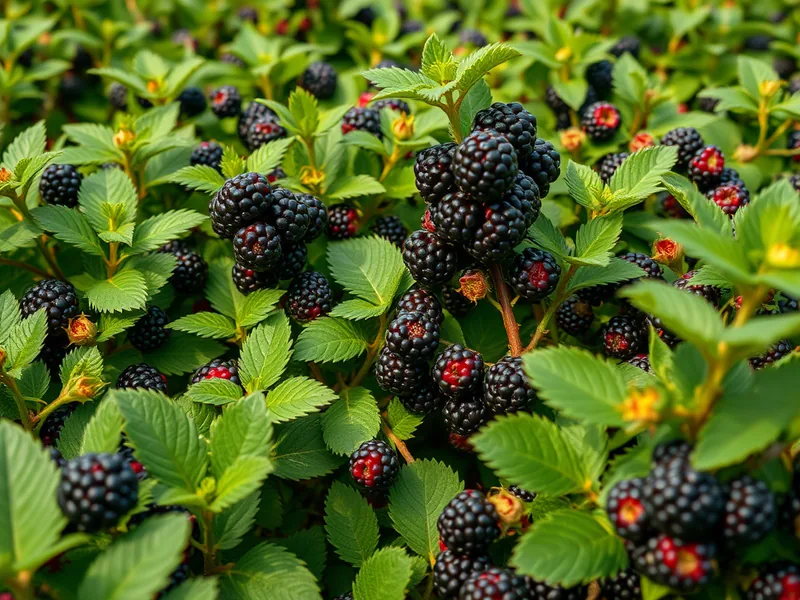
Pairwise's first commercial product was a less bitter mustard green, launched in 2023. Although it was discontinued in early 2024 to focus on other gene-edited crops, the company has received over 50 regulatory approvals for five edited crops in nine countries. Their high-yielding blackberry variety is currently available in limited quantities in Colombia.
While Crispr holds immense promise, it's not without challenges. Regulatory hurdles and public perception are significant factors that could impact its adoption. Unlike GMOs, which faced intense backlash, Crispr seeds have so far received a more favorable response from regulators. However, as the technology becomes more widespread, it's likely to face increased scrutiny.
Pairwise's triple-threat blackberries, expected to hit US grocery stores by 2030, are a testament to the potential of modern genomics. By combining speed, precision, and efficiency, they could help usher in a new era of sustainable agriculture. As more companies and researchers explore Crispr technology, the future of food production looks brighter-and more innovative-than ever before.
Tags
Original Sources
Seedless Blackberries and Cherries That Grow on Bushes Vie to Be the Future of Food
↗ https://www.wired.com/story/seedless-blackberries-cherry-bushes-future-of-food
About the author
Kai built ML infrastructure at a Bay Area startup before developing an obsession with transformer architectures and inference optimisation that eventually pulled him out of product work entirely. A stint at a compute research lab sharpened his instinct for what actually matters in a model release versus what is marketing. He writes from the inside — from the perspective of someone who has debugged the systems he is describing at three in the morning. He is allergic to hype and instinctively drawn to the unglamorous plumbing questions that everyone else skips over.
More from The Engineer →This Week's Edition
17 August 2026
18 articles
Related Articles
DARPA's Robotic Repair Mission Aims to Service Satellites 22,000 Miles Up
Products & Applications · 5 min

Winning the Arbitration, Losing the Cash Flow: How the No Surprises Act's Payment Gap Squeezes Independent Doctors
Products & Applications · 5 min

Google Tests In-Chat Checkout With Flipkart on Gemini and AI Mode in India
Products & Applications · 5 min
Related Articles
DARPA's Robotic Repair Mission Aims to Service Satellites 22,000 Miles Up
Products & Applications · 5 min
Winning the Arbitration, Losing the Cash Flow: How the No Surprises Act's Payment Gap Squeezes Independent Doctors
Products & Applications · 5 min
Google Tests In-Chat Checkout With Flipkart on Gemini and AI Mode in India
Products & Applications · 5 min
More Stories
© 2026 Cedar & Bloom. All rights reserved.
