The Drum · Weekly AI news, freeSubscribe →

Share
Berlin's new roadmap marks a major milestone for Europe's energy transition, but it lands the same week experts warn the next UN chief could quietly retreat from climate action just as El Niño threatens hundreds of thousands of lives.
If you've ever watched a household slowly wean itself off a bad habit, you know the difference between good intentions and a real plan. This week, Germany put a real plan on paper. The government published a roadmap committing to phase out fossil fuels by 2045, with environment minister Carsten Schneider describing it as a strategy that "combines independence, affordability and climate protection."
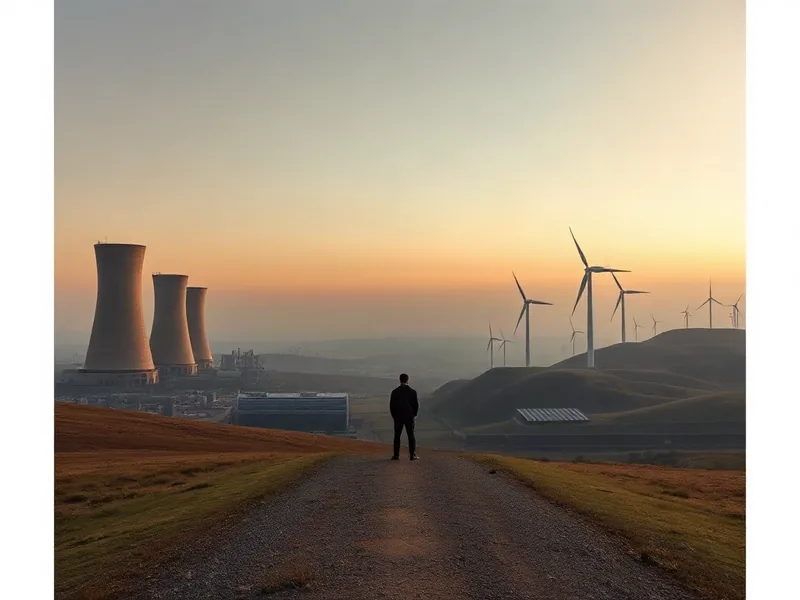
That's not a small claim for a country that spent decades leaning on Russian gas and, more recently, coal to keep its lights on and its factories running. The details matter here. Germany plans to ramp up renewable energy from 55% to 80% of electricity generation by 2030. That's roughly the difference between a household that gets half its power from clean sources and one that gets four-fifths of it, a genuine shift in how a modern economy runs. The plan also calls for an additional 12 gigawatts of onshore wind and a target of 215 gigawatts of solar by 2030. Coal, long a political sore point in Germany's industrial regions, is still slated for a 2038 exit, though officials left the door open to moving that up to 2035.
Germany isn't operating alone here. It's now the third major developed economy, following France and the Netherlands, to publish this kind of roadmap. The timing wasn't accidental either. The plan emerged on the sidelines of the UN General Assembly in New York, a venue where governments like to show their homework in front of the rest of the world.
While Germany was unveiling its roadmap, a very different kind of climate story was unfolding across the world's supply chains. New analysis from the Centre for Research on Energy and Clean Air found that China's cleantech exports last year, think wind turbines, solar panels, batteries and electric vehicles, avoided 374 million metric tonnes of CO2 emissions. That's more than the entire United Kingdom emitted in the same period. Lauri Myllyvirta, the centre's co-founder, called it evidence of the "growing climate impact of China's green technology boom," particularly for developing countries trying to leapfrog fossil infrastructure entirely.
That's the encouraging half of this week's news. The harder half comes from Somalia, where a report from the Integrated Food Security Phase Classification, a body backed by UN agencies and aid groups, warns that thousands of displaced people in the country's southwest could face famine between October and December if El Niño brings worse-than-expected flooding and humanitarian aid stays short. More than 5 million Somalis, over a quarter of the population studied, are already living with crisis-level food insecurity or worse, driven by repeated droughts, conflict and funding gaps.
The scale of what's coming is hard to overstate. A separate study making headlines this week estimates that this El Niño could cause more than 450,000 excess heat deaths by February. California has already declared a state of emergency in response. These aren't abstract projections. They're a preview of what happens when a naturally occurring climate pattern collides with a planet that's already running a fever.
Against that backdrop, the question of who leads global climate diplomacy suddenly feels less like inside-baseball and more like a matter of life and death. Climate and civil society experts are increasingly worried that the next UN secretary general could downgrade the priority of the climate crisis, according to the Guardian. Current secretary general António Guterres has been the most outspoken voice on climate of any UN chief, but he steps down at the end of September after two terms.
Several of his likely successors haven't shown the same appetite for the fight. Experts told the Guardian that candidates including Argentinian diplomat Rafael Grossi, former Senegalese president Macky Sall, and Ugandan former presidential candidate Olara Otunnu have raised particular concern, warning that some contenders could prove "disastrous" on climate even while enjoying backing from powerful countries, including the United States and its allies. Before departing, Guterres tried to lock in some momentum, launching a "Global Grids Accelerator" aimed at speeding up electricity infrastructure investment in Africa and Southeast Asia, where weak grids remain one of the biggest obstacles to clean energy adoption.
There's also friction closer to home for governments that talk a good game on climate. In the UK, foreign secretary Ed Miliband presented findings from a climate crisis national security report to fellow foreign ministers at the UN General Assembly, warning that the coming El Niño would "test the world's food systems as never before." That report was originally due for publication last October but was, in the Guardian's words, "suppressed on the eve of its launch by Downing Street," with only a redacted version surfacing in January. Miliband is now appointing a special representative for climate security and a new ministerial taskforce examining the security and resilience risks tied to climate change and nature loss, alongside a £330m contribution to the Global Environment Facility for protecting forests, oceans and other ecosystems in developing nations.
Meanwhile, in the United States, the Trump administration is reportedly weighing a 90-day ban on diesel exports to ease domestic energy prices ahead of the midterms, a move the oil industry has fought hard against, with API chief executive Mike Sommers condemning it and energy secretary Chris Wright warning it "would not work" and could push up gasoline and jet fuel prices instead.
These stories aren't separate threads. They're the same rope, pulled from different directions. Germany's roadmap shows what serious, funded, politically owned decarbonisation can look like when a government commits to it on paper and in budgets. China's export numbers show that clean technology, once it reaches scale, can quietly reshape emissions far beyond its own borders. But Somalia's looming famine and the projected heat deaths from El Niño are a blunt reminder of what's already locked in, and what happens when adaptation funding and political will don't keep pace with a warming world. Who sits atop the UN next, and whether they treat climate as central or peripheral, will shape how much of that gap gets closed, or how much wider it grows.
Tags
Original Sources
Daily Briefing: Germany’s fossil-fuel ‘roadmap’ | ‘Fears’ over next UN sec-gen | China’s cleantech exports - Carbon Brief
↗ https://www.carbonbrief.org/daily-briefing-germanys-fossil-fuel-roadmap-fears-over-next-un-sec-gen-chinas-cleantech-exports
About the author
Amara's entry point into AI was an epidemiology role at a London research hospital, where she spent five years studying how digital health tools reached — or conspicuously failed to reach — underserved communities. Watching early algorithmic systems in healthcare quietly entrench existing inequalities, she redirected her career toward the systemic consequences of AI at scale. She covers AI through an unflinching lens: who benefits, who bears the cost, and what evidence actually says versus what the press release claims. Her writing is calm and precise, but she doesn't mistake balance for neutrality.
More from The Steward →This Week's Edition
25 September 2026
31 articles
Related Articles
Related Articles
More Stories
© 2026 Cedar & Bloom. All rights reserved.