The Drum · Weekly AI news, freeSubscribe →
Share
Integrated biologics tech transfer now uses cohesive team frameworks to cut through the silos of traditional development stages, speeding up production while boosting safety standards in drug creation.
In the world of biologics drug development, the process from lab to patient is a complex journey that requires precision and coordination. Each step, from initial research to large-scale manufacturing, must be meticulously managed to ensure that the final product is both safe and effective. This is where technology transfer (tech transfer) plays a crucial role. Traditional methods often involve sequential handoffs between different teams, which can lead to delays and errors. However, integrated operating models are changing this by aligning activities within a unified framework.
For patients waiting for life-saving treatments, the efficiency of drug development is not just a matter of process; it’s a matter of time. Delays in technology transfer can prolong clinical trials and push back market availability, costing lives and resources. By integrating development and manufacturing activities, biopharmaceutical companies can reduce these delays, ensuring that new therapies reach those who need them faster.
Traditional tech transfer models typically involve a linear process where each team-development, manufacturing, analytical, and quality-operates in silos. For example, the development team might define a process, hand it over to the manufacturing team, which then passes it on to the analytical and quality teams for testing. This approach can lead to issues being identified only at the end of each step, causing significant delays as corrections are made.
In contrast, integrated operating models bring all these activities together in a shared environment. Imagine a factory where different departments work side by side instead of in separate buildings. In this setup, operators can directly observe large-scale behaviors while immediately verifying small-scale effects. This immediacy is crucial because biomanufacturing processes involve dynamic interactions between various parameters that change with scale.
Upstream processes, which involve the growth of cells to produce the desired biological product, depend on several critical factors. These include the cell line, gas transfer efficiency, oxygen mass transfer coefficient, mixing time, nutrient consumption, and metabolite accumulation. Each of these elements must be carefully controlled to ensure optimal performance.
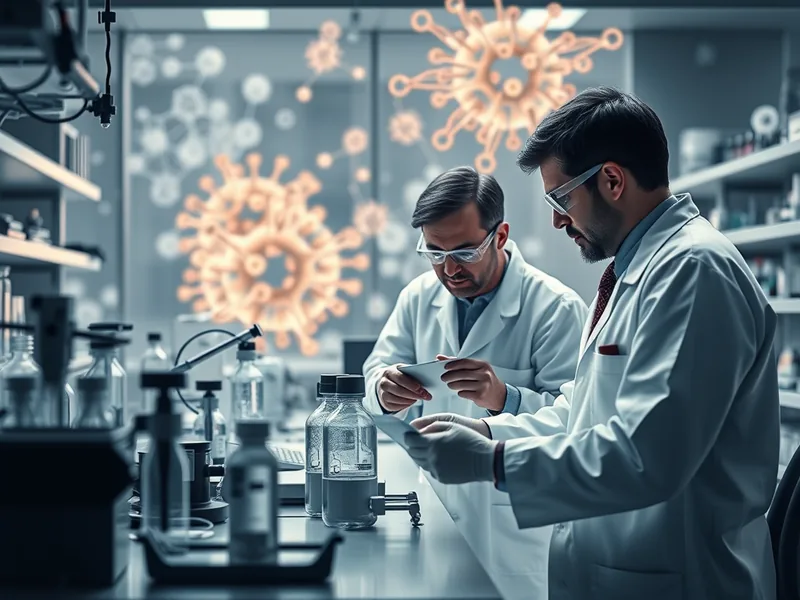
Downstream processes, which focus on purifying and recovering the product, are equally complex. They depend on feed quality, impurity loading, column packing, residence time, as well as resin and membrane performance. When technical teams operate in isolation, they often evaluate conditions retrospectively, leading to findings that are made after corrective options have narrowed. An integrated execution, however, allows for real-time investigations while conditions remain unchanged, reducing error propagation across subsequent runs.
One of the key benefits of integrated models is the ability to execute multiple tech transfer activities concurrently. For instance, facility fit assessments and raw material qualifications can proceed alongside scale-up efforts. Validation for mixing studies, filtration capacity, resin and membrane lifetimes, and chemical hold times can advance while engineering runs continue.
This concurrent approach not only speeds up the process but also enhances quality control. By addressing issues as they arise, rather than after the fact, integrated models help ensure that each step is optimized from the beginning.
The benefits of integrated operating models are not just theoretical. Companies that have adopted these approaches report significant improvements in efficiency and product quality. For example, a biopharmaceutical company using an integrated model was able to reduce the time required for tech transfer by 30%, leading to faster clinical trials and quicker market entry.
In the fast-paced world of biologics drug development, every day counts. Integrated operating models offer a promising solution to streamline technology transfer, ensuring that new therapies reach patients more quickly and safely. By bringing together all aspects of the process in a unified framework, these models are helping to transform how we develop life-saving treatments.
Tags
Original Sources
About the author
Amara's entry point into AI was an epidemiology role at a London research hospital, where she spent five years studying how digital health tools reached — or conspicuously failed to reach — underserved communities. Watching early algorithmic systems in healthcare quietly entrench existing inequalities, she redirected her career toward the systemic consequences of AI at scale. She covers AI through an unflinching lens: who benefits, who bears the cost, and what evidence actually says versus what the press release claims. Her writing is calm and precise, but she doesn't mistake balance for neutrality.
More from The Steward →This Week's Edition
30 April 2026
29 articles
Related Articles
Related Articles
More Stories
© 2026 Cedar & Bloom. All rights reserved.