The Drum · Weekly AI news, freeSubscribe →

Share
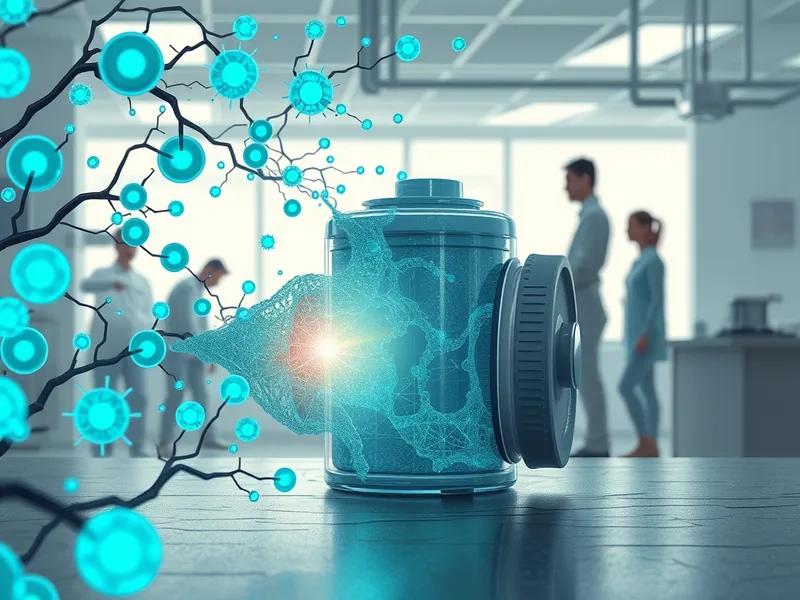
Scientists at Microsoft and PNNL harness AI to discover a groundbreaking solid-state electrolyte, promising safer and more sustainable battery technology crucial for the future of energy storage.
In an era where the demand for reliable and safe energy storage is soaring, a collaboration between tech giant Microsoft and the Pacific Northwest National Laboratory (PNNL) has brought us one step closer to achieving this goal. Using artificial intelligence (AI) and high-performance computing (HPC), researchers have discovered a new solid-state electrolyte that could revolutionize battery technology.
The stakes are high when it comes to energy storage. Current lithium-ion batteries, while widely used in everything from smartphones to electric vehicles, come with significant risks and challenges. They can overheat and catch fire, posing safety hazards. Additionally, the global demand for lithium is skyrocketing, making it increasingly scarce and expensive. The discovery of a new solid-state electrolyte could lead to batteries that are not only safer but also more sustainable and cost-effective.
Traditionally, discovering new materials has been a time-consuming and resource-intensive process. Scientists would often have to test numerous combinations of elements through trial and error. However, advances in AI and HPC are changing this paradigm. By leveraging machine learning algorithms and powerful computing resources, researchers can simulate and predict the properties of potential materials much more efficiently.
The collaboration between Microsoft and PNNL involved using AI to analyze vast databases of material properties and predict which combinations might yield a solid-state electrolyte with desirable characteristics. This approach allowed them to narrow down the possibilities quickly and focus on the most promising candidates. Once identified, these materials were then synthesized and tested in the lab.
The newly discovered solid-state electrolyte is a significant breakthrough for several reasons:
The discovery of this new material is just the beginning. The methods used by Microsoft and PNNL could be applied to find other innovative materials for various applications, from renewable energy storage to advanced electronics. By making their findings publicly available, the researchers hope to accelerate further advancements in the field.
While the potential benefits are significant, there are still challenges to overcome. Scaling up production of the new material and integrating it into commercial battery designs will require additional research and development. Additionally, ensuring that the manufacturing process is environmentally friendly will be crucial for realizing the full sustainability benefits.
The collaboration between Microsoft and PNNL showcases how AI and HPC can drive meaningful progress in materials science. The discovery of a safer, more sustainable solid-state electrolyte is a promising step towards addressing some of the most pressing challenges in energy storage. As we continue to rely on technology for our daily lives, innovations like this one will play a vital role in shaping a cleaner, more secure future.
Tags
Original Sources
About the author
Amara's entry point into AI was an epidemiology role at a London research hospital, where she spent five years studying how digital health tools reached — or conspicuously failed to reach — underserved communities. Watching early algorithmic systems in healthcare quietly entrench existing inequalities, she redirected her career toward the systemic consequences of AI at scale. She covers AI through an unflinching lens: who benefits, who bears the cost, and what evidence actually says versus what the press release claims. Her writing is calm and precise, but she doesn't mistake balance for neutrality.
More from The Steward →This Week's Edition
22 January 2024
29 articles
Related Articles
Nuclear Plants Are Squeezing Out More Power, But It Won't Be Enough to Meet AI's Demand
Environment & Climate · 5 min
The Hidden Environmental Price Tag of Artificial Intelligence
Environment & Climate · 5 min

Iambic Therapeutics Raises $150 Million in IPO to Fund AI-Designed Cancer Drugs
Finance & Markets · 5 min
Related Articles
Nuclear Plants Are Squeezing Out More Power, But It Won't Be Enough to Meet AI's Demand
Environment & Climate · 5 min
The Hidden Environmental Price Tag of Artificial Intelligence
Environment & Climate · 5 min
Iambic Therapeutics Raises $150 Million in IPO to Fund AI-Designed Cancer Drugs
Finance & Markets · 5 min
More Stories
© 2026 Cedar & Bloom. All rights reserved.
