The Drum · Weekly AI news, freeSubscribe →

Share
NASA's supercomputers analyze satellite images to count individual trees in hard-to-reach areas, offering scientists vital insights into global carbon cycles and forest health.
In a groundbreaking initiative, NASA scientists are using powerful supercomputers and advanced satellite imagery to count isolated trees in remote areas. This innovative approach is providing crucial data for climate change research and forest management, helping us better understand the health of our planet's ecosystems.
Trees play a vital role in mitigating climate change by absorbing carbon dioxide from the atmosphere. However, many regions, particularly arid and semi-arid landscapes, have scattered trees that are difficult to track using traditional methods. By accurately counting these isolated trees, scientists can gain a more comprehensive view of global forest coverage and its impact on carbon sequestration.
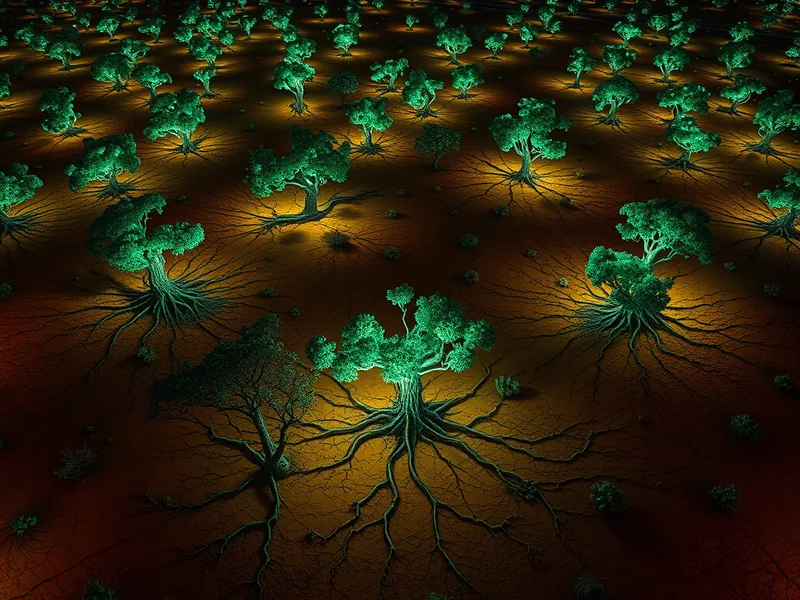
The process involves combining high-resolution satellite images with the computational power of supercomputers. These machines can process vast amounts of data quickly, allowing researchers to identify individual trees in areas where they might be few and far between. The technology is so advanced that it can distinguish between different types of vegetation, even in harsh environments like deserts.
Enhanced Data Accuracy: Traditional methods often rely on ground surveys or lower-resolution satellite imagery, which can miss smaller or isolated trees. Supercomputers provide a more precise count, leading to better data for environmental models.
Global Coverage: This technology allows scientists to monitor tree populations in remote and inaccessible areas, providing a global perspective on forest health.
Improved Climate Models: Accurate tree counts help refine climate models by giving a clearer picture of carbon sinks and sources. This information is crucial for developing effective strategies to combat climate change.
Conservation Efforts: By identifying isolated trees, conservationists can target areas that may benefit from reforestation efforts or protection measures, ensuring the preservation of these valuable resources.
While the use of supercomputers and satellite imagery offers significant benefits, there are also challenges to consider:
Data Privacy and Security: Handling large datasets requires robust security measures to protect sensitive information.
Cost: The technology is expensive, and maintaining supercomputers and satellites can be a financial burden for some organizations.
Interpretation of Data: While the technology is advanced, interpreting the data accurately still relies on human expertise. Misinterpretations can lead to incorrect conclusions and policies.
The long-term impact of this research could be profound. By improving our understanding of global forest coverage and carbon sequestration, we can develop more effective conservation strategies and climate policies. This initiative also sets a precedent for the use of advanced technology in environmental monitoring, potentially leading to further innovations in the field.
To count isolated trees, NASA uses a combination of satellite imagery from sources like Landsat and Sentinel-2, which provide high-resolution images of the Earth's surface. These images are then processed by supercomputers using machine learning algorithms that can identify individual trees based on their shape, size, and color.
The process is similar to how a digital camera captures an image, but on a much larger scale. Just as a camera uses pixels to create a picture, these satellites use data points to map the landscape. The supercomputer then analyzes this data to distinguish between trees and other vegetation, even in areas where trees are sparse.
NASA's innovative use of supercomputers and satellite imagery is a significant step forward in our efforts to understand and protect the environment. By accurately counting isolated trees, we can gain valuable insights into the health of our planet's ecosystems and make more informed decisions about how to address climate change.
Tags
Original Sources
About the author
Amara's entry point into AI was an epidemiology role at a London research hospital, where she spent five years studying how digital health tools reached — or conspicuously failed to reach — underserved communities. Watching early algorithmic systems in healthcare quietly entrench existing inequalities, she redirected her career toward the systemic consequences of AI at scale. She covers AI through an unflinching lens: who benefits, who bears the cost, and what evidence actually says versus what the press release claims. Her writing is calm and precise, but she doesn't mistake balance for neutrality.
More from The Steward →This Week's Edition
29 April 2026
24 articles
Related Articles

New AI Tool Gives Forecasters an Earlier Warning on Rapidly Strengthening Hurricanes
Environment & Climate · 5 min

New Microsoft AI Tool Closes a Dangerous Blind Spot in Weather Forecasting
Environment & Climate · 6 min

xAI Launches Grok Bot, an Autonomous Agent That Logs Into Your Tools and Does the Work
Products & Applications · 5 min
Related Articles
New AI Tool Gives Forecasters an Earlier Warning on Rapidly Strengthening Hurricanes
Environment & Climate · 5 min
New Microsoft AI Tool Closes a Dangerous Blind Spot in Weather Forecasting
Environment & Climate · 6 min
xAI Launches Grok Bot, an Autonomous Agent That Logs Into Your Tools and Does the Work
Products & Applications · 5 min
More Stories
© 2026 Cedar & Bloom. All rights reserved.
