The Drum · Weekly AI news, freeSubscribe →

Share
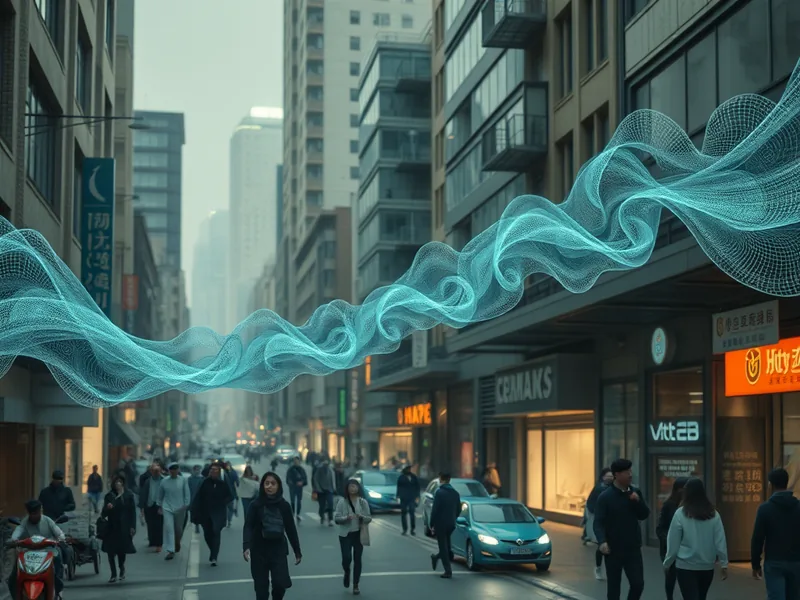
Scientists at The University of Texas have created an AI system capable of rendering vivid street images from sound alone, opening new possibilities for how machines perceive and interpret urban environments.
In a groundbreaking study, researchers at The University of Texas at Austin have developed an AI model that can convert sound recordings into detailed street-view images. This innovative technology bridges the gap between audio and visual perception, demonstrating the potential for machines to replicate human sensory experiences in urban environments.
Imagine walking down a bustling city street, hearing the hum of traffic, the chatter of people, and the occasional bird song. Now, imagine being able to visualize that street just from its sounds. For urban planners, environmental researchers, and anyone interested in understanding how our cities function, this could be a game-changer. It opens up new possibilities for studying and improving our urban environments without the need for extensive visual documentation.
The research team, led by Assistant Professor Yuhao Kang from UT's Department of Geography and the Environment, trained an AI model to generate images from sound recordings. They collected audio and visual data from a diverse range of urban and rural streetscapes across North America, Asia, and Europe. Using these paired datasets-10-second audio clips and corresponding image stills-the team taught the AI to recognize and translate auditory cues into visual elements.
To create this soundscape-to-image model, the researchers used YouTube videos from various cities around the world. They extracted 10-second audio clips and their corresponding visual frames, forming a dataset that the AI could learn from. Once trained, the model was tested by generating images from new audio recordings and comparing these to real-world photos.
The accuracy of the AI-generated images was evaluated using both computer algorithms and human judges. Computer evaluations focused on the relative proportions of greenery, buildings, and sky in the generated images compared to the source photos. Human participants were asked to match one of three generated images to a given audio sample.
The results were impressive: there were strong correlations in the proportions of sky and greenery between the generated and real-world images, with slightly lesser but still significant correlations for building proportions. Human participants achieved an average accuracy of 80% in matching the generated images to their corresponding audio samples.
Traditionally, the ability to envision a scene from sounds has been considered a uniquely human capability, reflecting our deep sensory connection with the environment. The success of this AI model suggests that machines can approximate this human experience, extending beyond mere recognition of physical surroundings to a more nuanced understanding of environmental cues.
“This means we can convert acoustic environments into vivid visual representations, effectively translating sounds into sights,” said Kang. “Our use of advanced AI techniques supported by large language models (LLMs) demonstrates that machines have the potential to replicate this human sensory experience.”
The ability to generate accurate street-view images from sound recordings has numerous applications. For urban planners, it can provide a new tool for assessing the visual impact of different soundscape designs without needing extensive on-site photography. For environmental researchers, it offers a way to study the effects of noise pollution on both human well-being and biodiversity.
Moreover, this technology could enhance accessibility for visually impaired individuals by providing detailed auditory descriptions of environments that they can visualize through AI-generated images.
The research conducted at The University of Texas at Austin not only pushes the boundaries of what AI can achieve but also highlights the potential for technology to deepen our understanding of the world around us. As we continue to explore and refine these capabilities, the implications for urban planning, environmental science, and accessibility are profound.
Tags
Original Sources
About the author
Amara's entry point into AI was an epidemiology role at a London research hospital, where she spent five years studying how digital health tools reached — or conspicuously failed to reach — underserved communities. Watching early algorithmic systems in healthcare quietly entrench existing inequalities, she redirected her career toward the systemic consequences of AI at scale. She covers AI through an unflinching lens: who benefits, who bears the cost, and what evidence actually says versus what the press release claims. Her writing is calm and precise, but she doesn't mistake balance for neutrality.
More from The Steward →This Week's Edition
16 December 2024
29 articles
Related Articles

Nuclear Plants Are Squeezing Out More Power, But It Won't Be Enough to Meet AI's Demand
Environment & Climate · 5 min

The Hidden Environmental Price Tag of Artificial Intelligence
Environment & Climate · 5 min

Iambic Therapeutics Raises $150 Million in IPO to Fund AI-Designed Cancer Drugs
Finance & Markets · 5 min
Related Articles
Nuclear Plants Are Squeezing Out More Power, But It Won't Be Enough to Meet AI's Demand
Environment & Climate · 5 min
The Hidden Environmental Price Tag of Artificial Intelligence
Environment & Climate · 5 min
Iambic Therapeutics Raises $150 Million in IPO to Fund AI-Designed Cancer Drugs
Finance & Markets · 5 min
More Stories
© 2026 Cedar & Bloom. All rights reserved.
