The Drum · Weekly AI news, freeSubscribe →

Share
Once dismissed as junk science after the cold fusion debacle of the 1980s, low-energy nuclear reactions are quietly drawing serious research funding again, with implications for clean energy that scientists say deserve a careful, evidence-based look.
For most people, the words "cold fusion" call to mind a scandal, not a scientific opportunity. In 1989, two chemists claimed they had produced nuclear fusion in a jar at room temperature. The claim collapsed under scrutiny, and the field became a byword for bad science. But nearly four decades later, researchers in the United States and Japan are taking a second, more disciplined look at a related idea: low-energy nuclear reactions, or LENR.
This matters because the stakes around energy are only getting higher. Communities across the globe are grappling with rising electricity demand, aging power grids, and the urgent need to cut carbon emissions. If even a fraction of the promise behind LENR turns out to be real, it could open a new path toward clean, distributed power. That is a big "if." But it is also why some scientists argue the idea deserves fresh, rigorous investigation rather than reflexive dismissal.
LENR research does not claim to replicate the discredited cold fusion experiments of the 1980s. Instead, it explores whether certain nuclear reactions can occur at much lower energies and temperatures than traditional nuclear physics predicts, without the extreme heat and pressure required by the fusion reactors most people picture when they hear "nuclear power." Think of it less like the sun's core, which fuses hydrogen at millions of degrees, and more like a chemical reaction that happens to release nuclear-scale energy under far gentler conditions. That is the working hypothesis researchers are testing, carefully and skeptically, in labs today.
What makes this moment different from the cold fusion fiasco is who is now paying attention. Serious institutions in both the U.S. and Japan are backing renewed experimental work on LENR, treating it as a legitimate line of inquiry worth funding rather than a fringe pursuit. That shift in institutional posture is itself notable. Science has long memories, and a field once associated with retracted claims and discredited press conferences does not typically win back credibility easily.
The renewed U.S.-Japan collaboration reflects a broader pattern in energy research: international partnerships pooling resources and expertise to tackle problems too large, or too uncertain, for any single country to solve alone. Japan has its own reasons to invest in diverse energy research, given its historical reliance on imported fuel and the national reckoning with nuclear power that followed the 2011 Fukushima disaster. The U.S., meanwhile, is under growing pressure to decarbonize its grid while keeping energy affordable and reliable.
None of this means LENR is close to producing usable power. The research remains exploratory, and the scientific community rightly demands extraordinary evidence for extraordinary claims, especially in a field haunted by past overreach. Replication, peer review, and transparent methodology will need to be the backbone of any future progress. Scientists working in this space seem aware of that burden. They are not promising a revolution. They are asking for the chance to test a hypothesis without the field being laughed out of the room before the data is in.
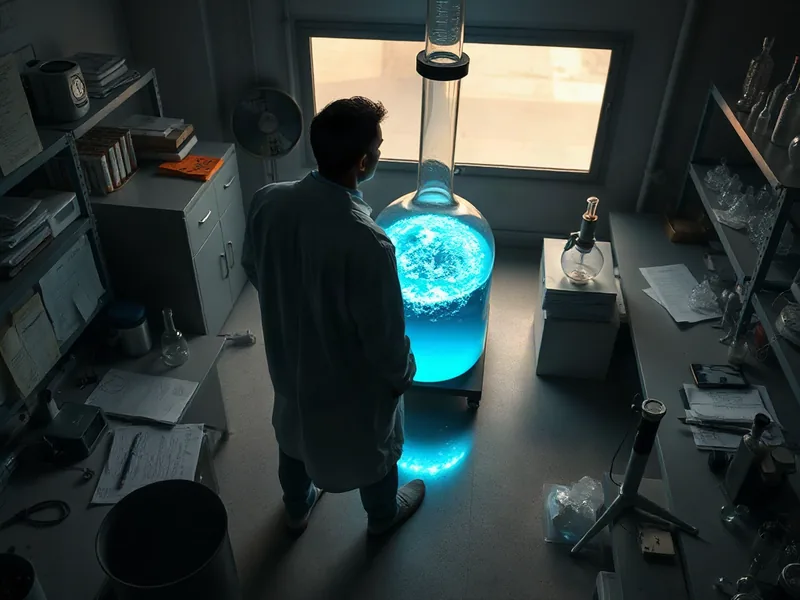
There is a useful parallel here to how society handles other unproven but potentially significant technologies, like early-stage carbon capture or experimental battery chemistries. Caution is warranted. So is curiosity. Shutting down inquiry entirely, simply because a related idea failed spectacularly decades ago, risks throwing away a legitimate scientific question along with the bad publicity that once surrounded it.
For communities living near aging power plants, or regions dependent on volatile fuel imports, any credible new energy pathway is worth understanding, even a speculative one. The environmental calculus of nuclear energy, in any form, involves real tradeoffs: waste management, safety systems, land use, and public trust. A low-energy approach, if it panned out, could in theory sidestep some of those challenges, since it would not require the same extreme conditions or safety infrastructure as conventional fusion or fission. That is a meaningful "could," not a promise.
It is also worth being honest about the risks of overselling early research. Public trust in nuclear science took a real hit after the cold fusion debacle, and hype cycles in emerging energy technology tend to leave behind disappointed investors, confused policymakers, and skeptical citizens. Researchers now revisiting LENR seem to understand this history well. Rebuilding scientific credibility in this space will likely take patient, incremental, well-documented work rather than bold announcements.
The renewed attention to low-energy nuclear reactions is not, by itself, a reason for optimism or alarm. It is a reason for attentiveness. Energy policy decisions ripple outward into public health, environmental justice, and economic stability, especially for communities near existing power infrastructure or those most exposed to the effects of climate change. If institutions in the U.S. and Japan are willing to fund careful research into an idea once treated as scientific poison, that alone signals something about how open the current energy landscape is to unconventional solutions.
Progress here, if it comes, will be slow and cumulative, not sudden. That is how good science tends to work, even when the underlying question is exciting. For now, the responsible position is to watch closely, ask hard questions of the researchers involved, and resist both premature dismissal and premature celebration. The people who stand to benefit most from breakthroughs in clean energy, working families facing rising utility bills, coastal communities bracing for climate impacts, are best served by science that takes its time and shows its work.
Tags
Original Sources
Scientists in the U.S. and Japan Get Serious About Low-Energy Nuclear Reactions
↗ https://spectrum.ieee.org/scientists-in-the-us-and-japan-get-serious-about-lowenergy-nuclear-reactions/particle-2?itm_source=summaries&itm_medium=ieee-spectrum&itm_campaign=summary-particle-2&itm_content=summary-fix
About the author
Amara's entry point into AI was an epidemiology role at a London research hospital, where she spent five years studying how digital health tools reached — or conspicuously failed to reach — underserved communities. Watching early algorithmic systems in healthcare quietly entrench existing inequalities, she redirected her career toward the systemic consequences of AI at scale. She covers AI through an unflinching lens: who benefits, who bears the cost, and what evidence actually says versus what the press release claims. Her writing is calm and precise, but she doesn't mistake balance for neutrality.
More from The Steward →This Week's Edition
30 September 2026
28 articles
Related Articles
US Senate Reaches Permitting Deal as Swiss Glaciers Reveal Climate's Toll
Environment & Climate · 6 min
Small Batteries in Stoves, E-Bikes, and Food Carts Could Quietly Reshape the Grid
Environment & Climate · 5 min

Payerset Bets on AI Research Assistant to Make Price Transparency Data Usable
Products & Applications · 6 min
Related Articles
US Senate Reaches Permitting Deal as Swiss Glaciers Reveal Climate's Toll
Environment & Climate · 6 min
Small Batteries in Stoves, E-Bikes, and Food Carts Could Quietly Reshape the Grid
Environment & Climate · 5 min
Payerset Bets on AI Research Assistant to Make Price Transparency Data Usable
Products & Applications · 6 min
More Stories
© 2026 Cedar & Bloom. All rights reserved.
