The Drum · Weekly AI news, freeSubscribe →

Share
As more hospitals recognize the life-saving potential of extracorporeal membrane oxygenation (ECMO), many still face significant hurdles that can stall or even derail these specialized programs.
For many tertiary care hospitals, not offering extracorporeal membrane oxygenation (ECMO) is becoming increasingly difficult to justify. ECMO, a technique that temporarily supports heart and lung function for critically ill patients, has shown remarkable success in improving survival rates. However, despite its potential, many hospitals hesitate to implement ECMO programs due to common pitfalls that can lead to their failure.
When a hospital decides not to offer ECMO, it often means patients who could have been saved are transferred, delayed, or even lost. As outcomes continue to improve and the technology becomes more accessible, the case for inaction grows weaker by the year. Yet, fear of the unknown keeps many hospitals on the sidelines. This is not due to a lack of clinical skill or good intentions but because highly specialized programs like ECMO can falter without the right institutional infrastructure.
One of the most significant challenges for new ECMO programs is the "who do you call?" problem. When a hospital starts an ECMO program from scratch, everyone involved is essentially a beginner. While solid ICU staff can be trained to perform ECMO, they need experienced backup when complications arise at 2 a.m. In established programs with years of experience, there's always someone who has seen it before-a grizzled specialist or a medical director with thousands of ECMO hours under their belt. But in a new program, that person simply doesn't exist.
This structural reality can lead to feelings of isolation among specialists, causing them to quietly abandon ECMO for more familiar therapies. As a result, the ECMO program fails to grow and expand, leading to a cycle of low volume, eroding skill, and diminishing confidence. Programs that succeed almost always have access to experienced clinicians, whether through outside hires or external partnerships, who can serve as a lifeline during those critical first 6-12 months.
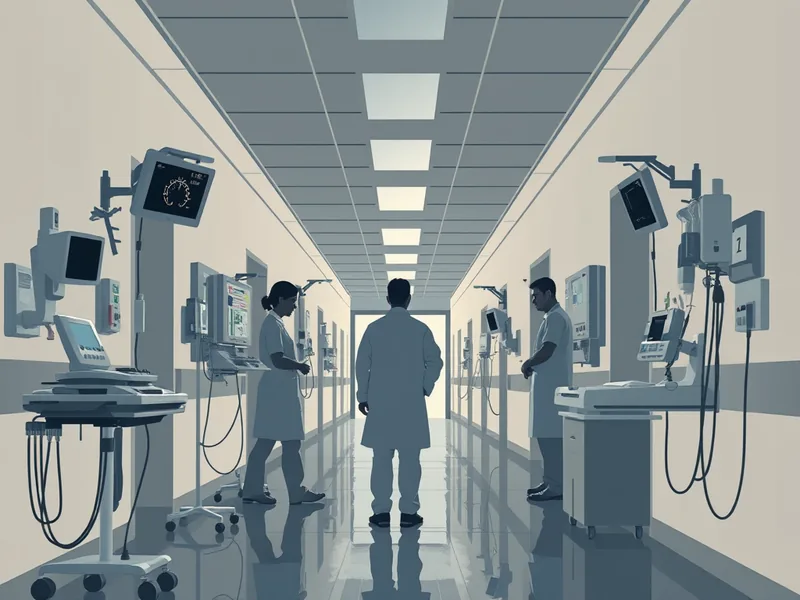
Another common pitfall is the feast-or-famine staffing trap. ECMO patient volumes are notoriously unpredictable, which makes it challenging to maintain an appropriately sized and skilled staff. During low-volume periods, there may be too many staff members with nothing to do, leading to inefficiencies and wasted resources. Conversely, during high-volume periods, the hospital might struggle to have enough trained personnel on hand to manage the influx of patients. This unpredictability can strain both the budget and the morale of the ECMO team.
To overcome this challenge, hospitals need to develop flexible staffing models that can adapt to changing patient volumes. This might include cross-training staff in multiple critical care areas or establishing relationships with other ECMO centers for temporary support during high-demand periods. Investing in simulation training and ongoing education can help maintain skills and readiness among the ECMO team, even during low-volume times.
The success or failure of ECMO programs has significant implications for patient care and public health. For critically ill patients, access to ECMO can mean the difference between life and death. Hospitals that are able to establish and sustain successful ECMO programs not only improve survival rates but also reduce the burden on other healthcare facilities by keeping these patients in their own system.
However, the challenges of starting and maintaining an ECMO program highlight the need for robust institutional support and strategic planning. By addressing common pitfalls like the "who do you call?" problem and the feast-or-famine staffing trap, hospitals can ensure that their ECMO programs thrive and continue to provide life-saving care to those who need it most.
Tags
Original Sources
Four Reasons ECMO Programs Stall - MedCity News
↗ https://medcitynews.com/2026/05/four-reasons-ecmo-programs-stall
About the author
Amara's entry point into AI was an epidemiology role at a London research hospital, where she spent five years studying how digital health tools reached — or conspicuously failed to reach — underserved communities. Watching early algorithmic systems in healthcare quietly entrench existing inequalities, she redirected her career toward the systemic consequences of AI at scale. She covers AI through an unflinching lens: who benefits, who bears the cost, and what evidence actually says versus what the press release claims. Her writing is calm and precise, but she doesn't mistake balance for neutrality.
More from The Steward →This Week's Edition
22 May 2026
29 articles
Related Articles
Related Articles
More Stories
© 2026 Cedar & Bloom. All rights reserved.