The Drum · Weekly AI news, freeSubscribe →

Share
From AI that flags pregnancy risks months early to robots crawling through water pipes, this year's finalist pool shows how unglamorous, local innovation is quietly reshaping health, food, energy, and water security worldwide.
Think about the last time you worried about a family member's health, or wondered whether the water coming out of your tap was safe. Now imagine living somewhere those worries aren't occasional, they're constant. That's the reality for hundreds of millions of people, and it's the gap the Zayed Sustainability Prize is trying to narrow, one small, scalable solution at a time.
The prize has just announced its finalists for the 2027 cycle, selected from a record 10,233 submissions representing 177 countries. That's a 32% jump from the previous year, a sign that interest in practical sustainability work is accelerating even as the challenges it addresses grow more urgent. The prize, based in Abu Dhabi, started life as the Zayed Future Energy Prize before broadening its scope. Clean energy isn't a "future" technology anymore, it's the market reality, and the rebrand reflects that shift along with an expansion into health, food, water, and climate action.
What hasn't changed is the prize's basic bet: that solving big global problems often starts with small organizations doing unglamorous work well. This year's finalists span six categories, Health, Food, Energy, Water, Climate Action, and Global High Schools, and every single finalist now receives guaranteed funding, not just the eventual winners.
In Health, the standout is Elythea, a US-based company using artificial intelligence to predict pregnancy complications from routine first-trimester data, six to eight months before they happen. That's roughly the difference between catching a problem while there's still time to act and discovering it in an emergency room. The tool has reached more than 63,000 people directly and has already reduced adverse maternal outcomes in a five-country trial. Also recognized: GOAL 3, a Dutch SME combining bedside vital-sign monitors with tablet records to catch deterioration in children and newborns earlier, now used in 48 hospitals, and Marsi Bionics of Spain, whose pediatric exoskeleton helps children walk using robotic joints that mimic natural muscle movement.
Food security finalists are tackling the problem from the soil up. Adaptive Symbiotic Technologies, based in the US, uses microbial treatments combining fungal endophytes and beneficial bacteria to help crops survive drought, heat, and salty or depleted soil, boosting yields by 30 to 200% across more than 13 million acres. In Japan, TOWING's biochar product "Soratan" restores degraded soil in about a month, a process that would otherwise take three to five years. Colombia's ALSEC Alimentos Secos turns polluting whey runoff from artisan cheesemaking into usable protein and purified water, protecting 4.3 billion liters of water in the process.
The Energy category highlights both access and storage innovation. Nigeria's Energy Assured has reached more than 4.6 million people, many of them smallholder farmers, through pay-as-you-go solar systems and clean cookstoves. Singapore's Flint has built a rechargeable battery using cellulose and zinc-manganese electrodes instead of lithium, cobalt, or nickel, essentially a battery without the supply chain headaches and fire risks that plague current designs. India's Sustain Plus has deployed over 34,000 decentralized clean energy solutions by pairing proven technology with community ownership and blended financing.
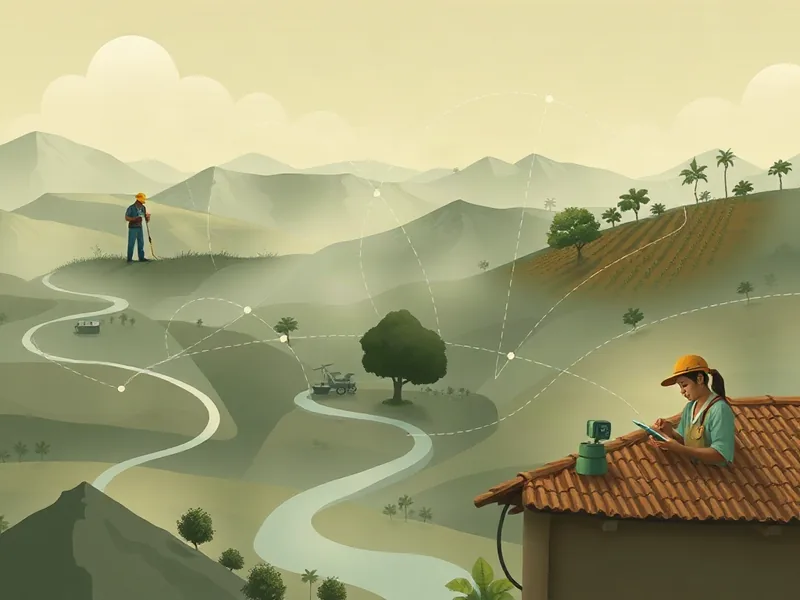
Water finalists are proving that old problems sometimes need both old and new fixes. Bolivia's Fundación Aguatuya converts wastewater into irrigation water and compost through modular treatment plants, recovering over a million cubic meters annually. In Bangladesh, Rupantar runs women-owned water enterprises that blend reverse osmosis systems with restored ponds and rainwater harvesting, delivering safe water to roughly 450,000 people year-round. India's Solinas sends AI-equipped robotic crawlers through underground pipes to inspect and clean them from the inside, a method that saves up to 600,000 liters of water per day for every kilometer inspected.
Climate Action finalists are leaning into nature's own systems rather than working against them. Peru's Aquafondo is reviving ancestral water management techniques, amunas, qochas, and high-Andean wetlands, to recharge aquifers and generate 14 million cubic meters of additional groundwater each year. Coral Gardeners, working out of French Polynesia, has planted more than 221,000 heat-resilient corals using AI and 3D reef mapping to guide restoration. And String Bio in India has developed a methane-derived biostimulant for rice paddies that cuts methane emissions by up to 50% while increasing yields by as much as 39%, a rare case of a climate fix that also pays off for farmers immediately.
Rounding out the list are eighteen Global High Schools finalists from six regions, students in countries from Canada to Fiji who've built their own sustainability projects, proof that some of the most durable climate solutions start in classrooms rather than labs.
Money alone won't solve any of these problems, but it helps. Organizational finalists across Health, Food, Energy, Water, and Climate Action each receive $100,000, while Global High Schools finalists get $25,000. Category winners receive $1 million, or $150,000 for the school teams. That guaranteed funding for every finalist, a policy introduced in the 2026 cycle, matters because it means promising ideas get support even if they don't ultimately win, which increases the odds that good work actually scales instead of stalling for lack of cash.
The bigger context here is scale. Through its past winners alone, the Zayed Sustainability Prize says it has improved more than 411 million lives, expanding access to healthcare, food, energy, and clean water. That's not a small number, but it's also a reminder of how much distance remains between where we are and where global access to these basics needs to be. Winners will be announced on January 12, 2027, during Abu Dhabi Sustainability Week. Whoever takes home the top prizes, the broader lesson from this year's finalist pool holds regardless: durable progress on climate and health tends to come from practical, locally rooted fixes, not just headline-grabbing breakthroughs.
Tags
Original Sources
Zayed Sustainability Prize Picks Finalists from 10,233 Submissions - CleanTechnica
↗ https://cleantechnica.com/2026/10/24/zayed-sustainability-prize-picks-finalists-from-10233-submissions
About the author
Amara's entry point into AI was an epidemiology role at a London research hospital, where she spent five years studying how digital health tools reached — or conspicuously failed to reach — underserved communities. Watching early algorithmic systems in healthcare quietly entrench existing inequalities, she redirected her career toward the systemic consequences of AI at scale. She covers AI through an unflinching lens: who benefits, who bears the cost, and what evidence actually says versus what the press release claims. Her writing is calm and precise, but she doesn't mistake balance for neutrality.
More from The Steward →This Week's Edition
25 October 2026
18 articles
Related Articles

The Navy's Carbon Problem: Why Electrifying Warships Matters for Climate Policy
Environment & Climate · 5 min

Frozen Moss on a Remote Arctic Ice Cap Reveals We Interrupted the Next Ice Age
Environment & Climate · 6 min

IEEE Expands Smart City Advisory Services as Municipal Tech Budgets Grow
Products & Applications · 5 min
Related Articles
The Navy's Carbon Problem: Why Electrifying Warships Matters for Climate Policy
Environment & Climate · 5 min
Frozen Moss on a Remote Arctic Ice Cap Reveals We Interrupted the Next Ice Age
Environment & Climate · 6 min
IEEE Expands Smart City Advisory Services as Municipal Tech Budgets Grow
Products & Applications · 5 min
More Stories
© 2026 Cedar & Bloom. All rights reserved.
