The Drum · Weekly AI news, freeSubscribe →
Share
AI's role in speeding up drug development could lead to more effective treatments for debilitating illnesses faster than ever before, offering renewed hope to patients waiting for cures.
In a world where medical breakthroughs can mean the difference between life and death, recent advances in artificial intelligence (AI) are reshaping the landscape of drug discovery. This shift is not just about faster development times; it's about bringing new hope to patients and communities worldwide.
The stakes are high. Each year, millions of people suffer from diseases that lack effective treatments. From rare genetic disorders to widespread conditions like cancer and Alzheimer’s, the need for new drugs is urgent. Traditional drug discovery methods can take over a decade and cost billions of dollars. AI, however, has the potential to streamline this process significantly.
Imagine you’re trying to find a specific piece of information in a vast library. Without any help, it could take hours or even days. Now, imagine having a super-smart assistant who can search through all the books in seconds and give you exactly what you need. That's what AI is doing for drug discovery.
AI algorithms can analyze massive datasets to identify potential drug candidates more efficiently than human researchers alone. These algorithms use machine learning techniques to predict how different molecules will interact with biological targets, such as proteins or enzymes. This predictive power allows scientists to focus their efforts on the most promising compounds, saving time and resources.
One of the most exciting examples of AI in action is the development of new antibiotics. Antibiotic resistance is a growing global threat, with some bacteria becoming immune to existing drugs. In 2020, researchers at MIT used an AI system called CLIME (Computer Learning for Identification of Microbial Entities) to discover a new antibiotic, halicin, which was effective against many drug-resistant strains.
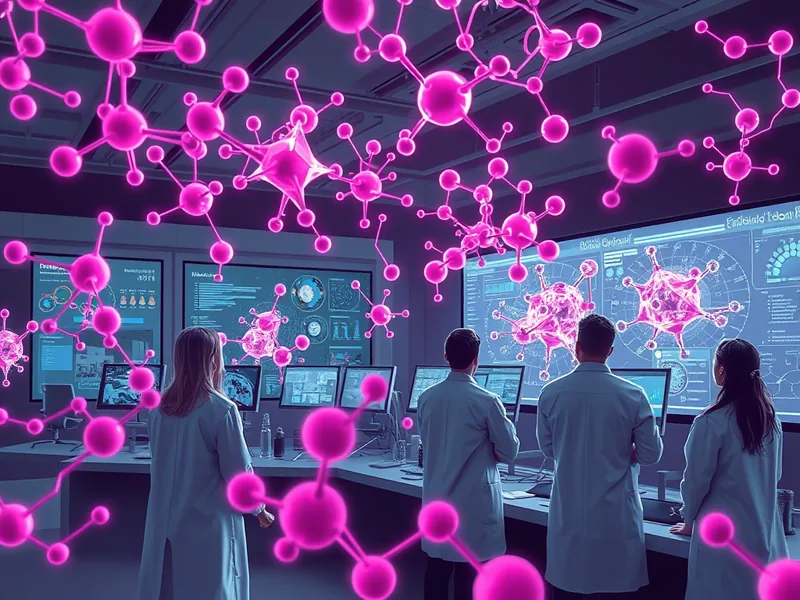
Another notable example comes from the field of cancer research. A team at the University of Cambridge used AI to identify a compound that could potentially treat pancreatic cancer, one of the most lethal forms of the disease. This discovery was made in just a fraction of the time it would have taken using traditional methods.
The benefits of AI in drug discovery are clear: faster development times, lower costs, and more effective treatments. However, there are also risks to consider. One concern is the potential for bias in AI algorithms, which could lead to overlooked or underrepresented populations. Additionally, the rapid pace of AI-driven research raises ethical questions about how new drugs should be tested and regulated.
The long-term consequences of AI in drug discovery are still unfolding, but they promise to be profound. As AI continues to evolve, it could lead to a more personalized approach to medicine, where treatments are tailored to individual patients based on their genetic makeup and lifestyle factors. This could revolutionize how we think about healthcare, making it more precise and effective.
The integration of AI into drug discovery is not just a technological advancement; it's a lifeline for millions of people around the world. By accelerating the development of new treatments, AI has the potential to transform public health and improve quality of life. As we move forward, it’s crucial to balance innovation with ethical considerations to ensure that these advancements benefit everyone.
Tags
Original Sources
↗ https://www.goodnewsnetwork.org/contribute/membership
About the author
Amara's entry point into AI was an epidemiology role at a London research hospital, where she spent five years studying how digital health tools reached — or conspicuously failed to reach — underserved communities. Watching early algorithmic systems in healthcare quietly entrench existing inequalities, she redirected her career toward the systemic consequences of AI at scale. She covers AI through an unflinching lens: who benefits, who bears the cost, and what evidence actually says versus what the press release claims. Her writing is calm and precise, but she doesn't mistake balance for neutrality.
More from The Steward →This Week's Edition
29 April 2026
29 articles
Related Articles
Related Articles
More Stories
© 2026 Cedar & Bloom. All rights reserved.