The Drum · Weekly AI news, freeSubscribe →

Share
This groundbreaking AI device can spot hard-to-detect cancers with 95% accuracy from a simple blood test, offering hope for earlier diagnosis and better treatment outcomes.
In a significant breakthrough for cancer detection, researchers have developed an artificial intelligence (AI) device that can identify hard-to-detect cancers in blood samples with remarkable accuracy. This new technology could revolutionize early cancer diagnosis, potentially saving countless lives by catching the disease at its most treatable stages.
Cancer is one of the leading causes of death worldwide, and early detection remains one of the most critical factors in improving survival rates. Many types of cancer are difficult to detect in their early stages, often only becoming apparent when symptoms appear and the disease has already progressed. The ability to diagnose these cancers earlier could dramatically improve patient outcomes.
The AI device uses a technique called "volatile organic compound (VOC) analysis" to detect specific chemical signatures in the blood that are associated with cancer. VOCs are molecules that can be released by tumors into the bloodstream, and they serve as biomarkers for various diseases. By analyzing these compounds, the AI can identify patterns that indicate the presence of cancer.
Think of it like a highly sensitive electronic nose. Just as a dog can smell specific scents in the air that humans cannot detect, this AI device can "sniff out" minute chemical signals in the blood that are indicative of cancer.
The study, conducted by an international team of researchers, involved testing the AI device on over 3,000 blood samples. The results were striking: the device achieved a 95% accuracy rate in detecting cancers that are typically difficult to diagnose early, such as pancreatic, ovarian, and lung cancer.
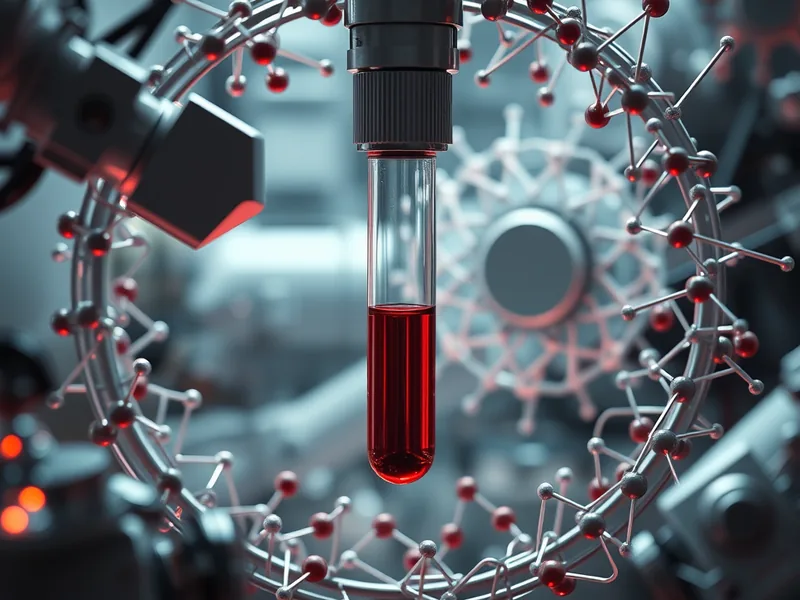
The potential benefits of this technology are enormous. Early detection can lead to more effective treatments and better outcomes for patients. For example, when detected early, the five-year survival rate for lung cancer can increase from about 6% to over 50%. This AI-powered blood test could make such early detection a routine part of healthcare.
However, as with any new medical technology, there are risks and challenges to consider. False positives-instances where the test incorrectly identifies cancer when it is not present-can lead to unnecessary anxiety and additional testing for patients. Conversely, false negatives-where the test fails to detect cancer when it is present-could delay necessary treatment. Ensuring the accuracy and reliability of the AI device will be crucial as it moves closer to clinical use.
If this technology proves effective in larger, more diverse populations, it could have a transformative impact on public health. Routine blood tests that include cancer screening could become standard practice, potentially catching many cases of cancer at a stage when they are most treatable. This could not only improve individual patient outcomes but also reduce the overall burden of cancer on healthcare systems.
The researchers are now planning larger clinical trials to further validate the AI device's effectiveness and safety. They hope that with continued research and development, this technology will be available for widespread use in the near future.
The development of an AI-powered blood test that can detect hard-to-find cancers with 95% accuracy is a significant step forward in cancer diagnosis. While there are still challenges to overcome, the potential benefits for public health are substantial. As we continue to advance our understanding and capabilities in this field, the future looks brighter for those facing the challenge of cancer.
Tags
Original Sources
About the author
Amara's entry point into AI was an epidemiology role at a London research hospital, where she spent five years studying how digital health tools reached — or conspicuously failed to reach — underserved communities. Watching early algorithmic systems in healthcare quietly entrench existing inequalities, she redirected her career toward the systemic consequences of AI at scale. She covers AI through an unflinching lens: who benefits, who bears the cost, and what evidence actually says versus what the press release claims. Her writing is calm and precise, but she doesn't mistake balance for neutrality.
More from The Steward →This Week's Edition
30 April 2026
29 articles
Related Articles
Related Articles
More Stories
© 2026 Cedar & Bloom. All rights reserved.