The Drum · Weekly AI news, freeSubscribe →

Share
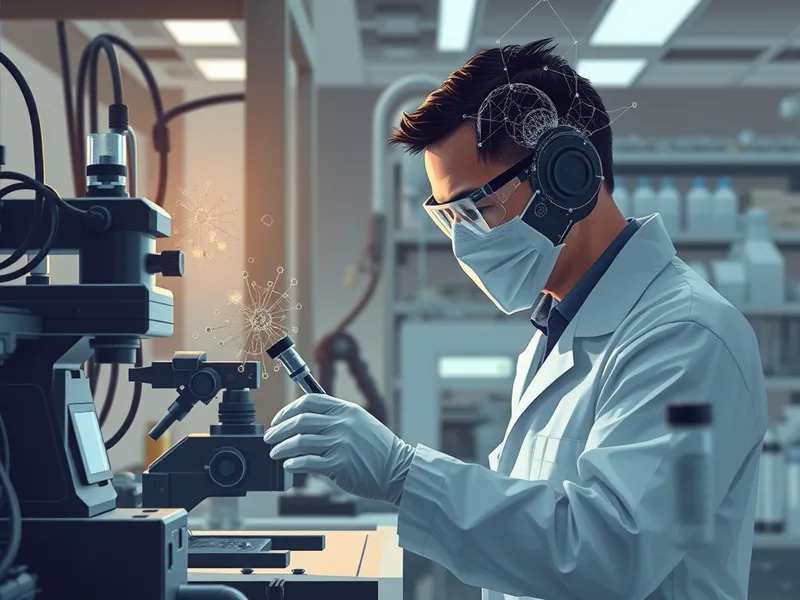
AI is revolutionizing biotech research by speeding up drug discovery processes, offering new hope in tackling complex diseases such as cancer and Alzheimer's that have eluded traditional medical approaches.
In a world where public health challenges are becoming increasingly complex, the integration of artificial intelligence (AI) into biotech research is ushering in a new era of drug discovery. This technological advancement not only accelerates the development of new treatments but also holds the potential to address some of the most pressing medical issues of our time.
The stakes are high for patients and healthcare providers alike. Diseases like cancer, Alzheimer's, and rare genetic disorders have long posed significant challenges due to their complexity and the limited effectiveness of existing treatments. AI can change this by identifying new drug candidates more efficiently and accurately than traditional methods. This means faster access to life-saving treatments for those who need them most.
To understand the impact of AI on drug discovery, it's helpful to think of it like a highly advanced detective. Traditional drug discovery is often compared to searching for a needle in a haystack-scientists must sift through countless compounds to find one that effectively treats a disease. This process can take years and cost millions of dollars.
AI, on the other hand, uses machine learning algorithms to analyze vast amounts of data from various sources, including genetic information, clinical trials, and existing scientific literature. These algorithms can predict which compounds are most likely to be effective against specific diseases, significantly narrowing down the search. It's like having a map that shows you where the needle is likely to be found.
The benefits of AI in drug discovery are profound. For one, it drastically reduces the time and cost associated with bringing new drugs to market. This can lead to more affordable treatments for patients and increased profitability for pharmaceutical companies, which can reinvest in further research and development.
However, there are also risks to consider. One concern is data privacy. AI systems require large datasets to function effectively, often including sensitive patient information. Ensuring that this data is securely stored and used ethically is crucial to maintaining public trust.
Another risk is the potential for bias in AI algorithms. If the training data is not diverse enough, the AI may produce biased results, leading to ineffective or even harmful treatments. Researchers must be vigilant in ensuring that their datasets are representative of the entire population.
The long-term consequences of AI in drug discovery could be transformative. As more drugs are developed and brought to market, we may see a significant improvement in public health outcomes. Conditions that were once considered untreatable or poorly managed may become manageable or even curable.
Moreover, the use of AI can lead to more personalized medicine. By analyzing individual patient data, AI can help tailor treatments to specific genetic profiles, leading to better outcomes and fewer side effects.
The integration of AI into biotech research is a promising development with the potential to revolutionize public health. While there are challenges to address, the benefits in terms of faster drug discovery, more affordable treatments, and personalized medicine make it an exciting area of innovation. As researchers continue to refine these technologies, we can look forward to a future where medical breakthroughs are not just possible but increasingly likely.
Tags
Original Sources
↗ https://www.goodnewsnetwork.org/more/press
About the author
Amara's entry point into AI was an epidemiology role at a London research hospital, where she spent five years studying how digital health tools reached — or conspicuously failed to reach — underserved communities. Watching early algorithmic systems in healthcare quietly entrench existing inequalities, she redirected her career toward the systemic consequences of AI at scale. She covers AI through an unflinching lens: who benefits, who bears the cost, and what evidence actually says versus what the press release claims. Her writing is calm and precise, but she doesn't mistake balance for neutrality.
More from The Steward →This Week's Edition
29 April 2026
29 articles
Related Articles
Related Articles
More Stories
© 2026 Cedar & Bloom. All rights reserved.