The Drum · Weekly AI news, freeSubscribe →

Share
As data centers fueling AI development face growing opposition, companies are being compelled to reconsider their environmental and social impact.
The rapid expansion of artificial intelligence (AI) has brought with it a surge in the construction of massive data centers. These facilities, which house servers and other computing infrastructure, are essential for training complex AI models. However, they come with significant environmental costs, particularly in terms of energy consumption and carbon emissions. In response, communities across the United States and beyond have begun to push back against these projects, forcing companies to reevaluate their plans.
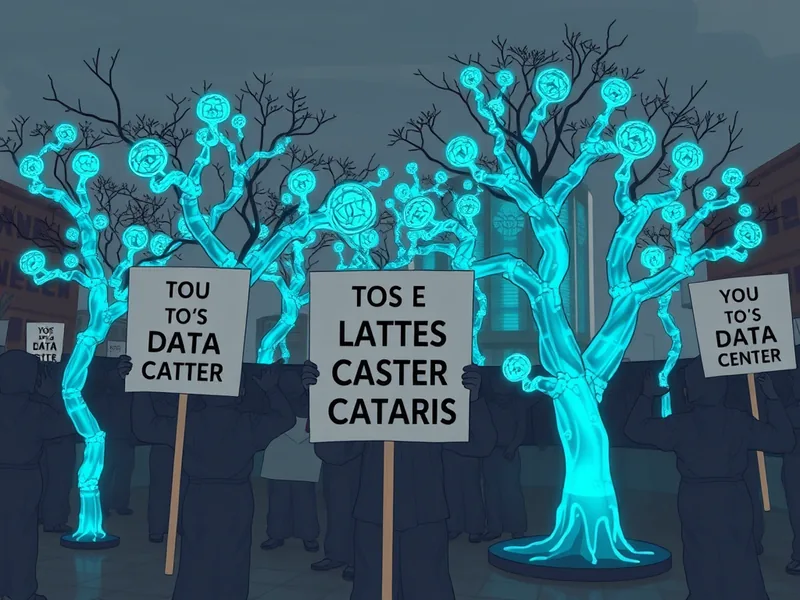
In Mount Carmel Township, Northumberland County, Pennsylvania, a yard sign opposing a planned data center stands along Route 54, symbolizing the growing resistance. This is not an isolated incident; similar signs are popping up in towns and cities from coast to coast. The concerns are varied but often center around the environmental impact, local resource strain, and potential health risks.
Data centers require vast amounts of electricity to power and cool their servers. According to a report by the International Energy Agency (IEA), data centers currently account for about 1% of global electricity demand. While this might seem small, it represents a significant and growing share of energy consumption. In regions with limited renewable energy sources, this can mean increased reliance on fossil fuels, contributing to higher carbon emissions.
The environmental impact of data centers is not just about energy consumption; it also includes water usage. Cooling systems in these facilities often rely on large quantities of water, which can strain local resources, especially in areas already facing water scarcity. For example, a study by the University of California, Santa Barbara, found that data centers in arid regions like Arizona and Nevada could exacerbate existing water shortages.
The construction of new data centers can have significant ecological impacts. Clearing land for these facilities can lead to habitat destruction and loss of biodiversity. In some cases, local wildlife is displaced, leading to further environmental degradation.
Companies are beginning to recognize these issues and are taking steps to mitigate their impact. For instance, Meta, formerly Facebook, recently announced that it would use 100% renewable energy for its data centers by 2030. Google has also made significant investments in renewable energy projects and claims to have achieved carbon neutrality across its operations.
However, these efforts are not always enough to assuage community concerns. In some cases, local opposition has led to legal challenges and delays in project timelines. For example, a planned data center in New York faced a lawsuit from environmental groups alleging that the facility would violate state clean air regulations.
The pushback against AI data centers is part of a broader trend of communities demanding greater accountability from tech companies. As AI continues to play an increasingly central role in our lives, the need for sustainable and responsible development practices becomes more urgent.
Going forward, it will be crucial for companies to engage with local stakeholders and address their concerns transparently. This might involve investing in renewable energy infrastructure, adopting more efficient cooling technologies, and implementing robust environmental monitoring programs. Companies should consider the long-term social and economic impacts of their projects, ensuring that they benefit the communities where they are located.
The future of AI development depends on finding a balance between technological progress and environmental stewardship. By working collaboratively with local communities and adopting sustainable practices, tech companies can help ensure that the benefits of AI are realized without compromising the health of our planet.
Tags
Original Sources
The fight against AI data centers is just beginning
↗ https://www.theverge.com/column/963346/ai-data-centers-fight
About the author
Amara's entry point into AI was an epidemiology role at a London research hospital, where she spent five years studying how digital health tools reached — or conspicuously failed to reach — underserved communities. Watching early algorithmic systems in healthcare quietly entrench existing inequalities, she redirected her career toward the systemic consequences of AI at scale. She covers AI through an unflinching lens: who benefits, who bears the cost, and what evidence actually says versus what the press release claims. Her writing is calm and precise, but she doesn't mistake balance for neutrality.
More from The Steward →This Week's Edition
20 July 2026
29 articles
Related Articles

Nuclear Plants Are Squeezing Out More Power, But It Won't Be Enough to Meet AI's Demand
Environment & Climate · 5 min

The Hidden Environmental Price Tag of Artificial Intelligence
Environment & Climate · 5 min

Iambic Therapeutics Raises $150 Million in IPO to Fund AI-Designed Cancer Drugs
Finance & Markets · 5 min
Related Articles
Nuclear Plants Are Squeezing Out More Power, But It Won't Be Enough to Meet AI's Demand
Environment & Climate · 5 min
The Hidden Environmental Price Tag of Artificial Intelligence
Environment & Climate · 5 min
Iambic Therapeutics Raises $150 Million in IPO to Fund AI-Designed Cancer Drugs
Finance & Markets · 5 min
More Stories
© 2026 Cedar & Bloom. All rights reserved.
