The Drum · Weekly AI news, freeSubscribe →

Share
Europe's push for AI leadership clashes with its climate ambitions as industry experts advocate for gas-powered data centers, mirroring American trends and challenging sustainability goals.
As European nations gear up to harness artificial intelligence (AI) for economic and technological advancement, a looming question is how to power the massive data centres required for these ambitious projects. The gas turbine industry, however, seems confident that fossil fuels will be the answer.
In Brussels, at the Datacloud Energy Europe conference dedicated to "defining Europe’s AI power strategy," Francesco Ciccola of Mitsubishi Power Aero expressed his belief that European governments will eventually follow the U.S.'s lead in embracing natural gas for these data centres. “Sooner or later there will be a wake-up call for the EU,” he stated.
The United States has already seen significant developments in this area, with San Francisco-based Global Energy Monitor (GEM) reporting that the U.S. leads the world in new gas power development tied to data centres. Mitsubishi Power Aero, a major provider of turbines for these facilities in the U.S., is now setting its sights on Europe.
The push for gas-powered AI data centres raises significant concerns about climate change and environmental sustainability. Data centres are energy-intensive operations that require vast amounts of electricity to run and cool their servers. According to a report by GEM, the U.S. has already seen a surge in natural gas plant constructions to meet this demand, and similar trends could soon emerge in Europe.
The implications for climate goals are profound. The European Union (EU) and the United Kingdom (UK) have set ambitious targets to reduce greenhouse gas emissions and transition to renewable energy sources. Gas-powered data centres would not only hinder these efforts but could also lock in long-term dependencies on fossil fuels, undermining the region's commitment to a green future.
To understand why this issue is so critical, consider an analogy: If building AI data centres is like constructing new cities, then powering them with gas is akin to fueling those cities with coal. While it might be cheaper and more readily available in the short term, the long-term environmental costs are substantial.
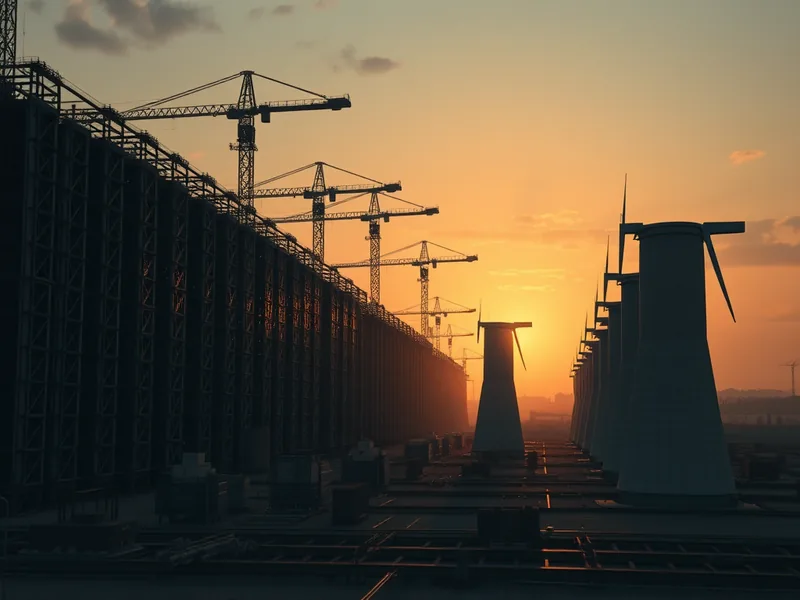
Proponents of gas-powered data centres argue that natural gas is a cleaner alternative to coal and can provide a reliable source of energy to support the growing AI industry. Gas turbines are also relatively efficient and can be ramped up or down quickly to meet fluctuating demand, which is crucial for data centres where power needs can vary significantly.
However, these benefits come with significant risks. Natural gas, while cleaner than coal, still emits carbon dioxide and other greenhouse gases when burned. The extraction process, particularly hydraulic fracturing (fracking), can also lead to methane leaks, a potent greenhouse gas that has a much greater warming effect than CO2 over the short term.
Moreover, investing in new gas infrastructure could divert resources away from renewable energy projects, slowing down the transition to a truly sustainable energy system. This is especially concerning given the urgent need to address climate change and meet international commitments under the Paris Agreement.
The decision to power AI data centres with natural gas has far-reaching consequences. It not only affects Europe’s ability to meet its climate targets but also influences global trends in energy policy. If European countries adopt this approach, it could set a precedent for other regions facing similar challenges.
Mitsubishi Power Aero, while emphasizing its commitment to decarbonization and regulatory compliance, acknowledges the market dynamics at play. “Any remarks made at Datacloud Energy Europe were intended to describe observed market conditions and customer demand, not to comment on or advocate for any political or regulatory approach,” Ciccola stated.
As European policymakers weigh their options, it is crucial to consider both the immediate needs of the AI industry and the long-term impacts on the environment. Investing in renewable energy sources like wind and solar power, along with advanced battery storage technologies, could provide a more sustainable path forward.
Ultimately, the decision should be guided by a commitment to reducing greenhouse gas emissions and transitioning to a low-carbon economy. By doing so, Europe can lead the way in responsible AI development that benefits both people and the planet.
Tags
Original Sources
About the author
Amara's entry point into AI was an epidemiology role at a London research hospital, where she spent five years studying how digital health tools reached — or conspicuously failed to reach — underserved communities. Watching early algorithmic systems in healthcare quietly entrench existing inequalities, she redirected her career toward the systemic consequences of AI at scale. She covers AI through an unflinching lens: who benefits, who bears the cost, and what evidence actually says versus what the press release claims. Her writing is calm and precise, but she doesn't mistake balance for neutrality.
More from The Steward →This Week's Edition
30 April 2026
29 articles
Related Articles

Nuclear Plants Are Squeezing Out More Power, But It Won't Be Enough to Meet AI's Demand
Environment & Climate · 5 min

The Hidden Environmental Price Tag of Artificial Intelligence
Environment & Climate · 5 min

Iambic Therapeutics Raises $150 Million in IPO to Fund AI-Designed Cancer Drugs
Finance & Markets · 5 min
Related Articles
Nuclear Plants Are Squeezing Out More Power, But It Won't Be Enough to Meet AI's Demand
Environment & Climate · 5 min
The Hidden Environmental Price Tag of Artificial Intelligence
Environment & Climate · 5 min
Iambic Therapeutics Raises $150 Million in IPO to Fund AI-Designed Cancer Drugs
Finance & Markets · 5 min
More Stories
© 2026 Cedar & Bloom. All rights reserved.
