The Drum · Weekly AI news, freeSubscribe →

Share
AI-powered camera systems are being deployed at wind farms to predict and prevent bird collisions, providing a lifeline for avian species while advancing clean energy initiatives.
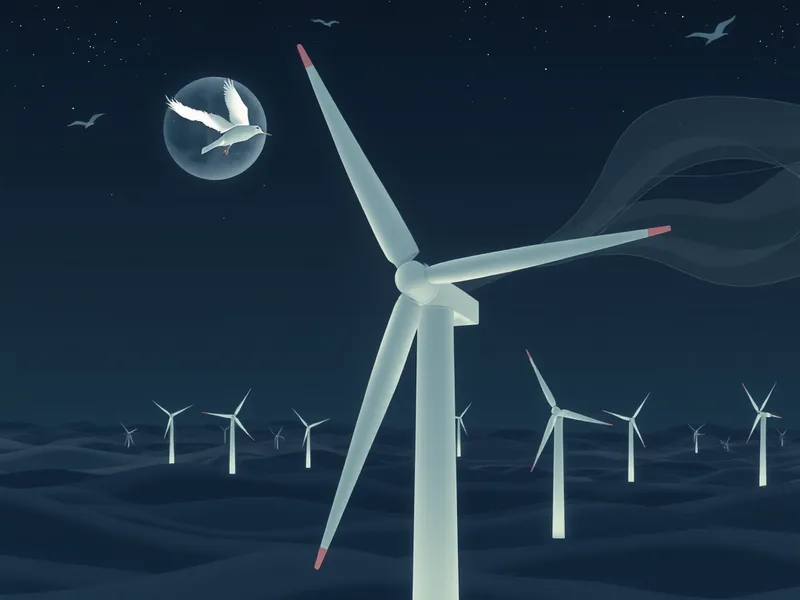
As the world increasingly turns to renewable energy sources, wind power has emerged as a vital component in reducing carbon emissions. However, one of the significant concerns associated with wind turbines is their impact on bird populations. Each year, thousands of birds are killed by turbine blades, posing a serious threat to biodiversity and conservation efforts. Now, innovative technology using AI and cameras is helping to mitigate this problem, offering a promising solution for both energy production and wildlife protection.
The challenge of balancing renewable energy with environmental stewardship has been a longstanding issue in the wind industry. Birds, especially raptors like eagles and hawks, are particularly vulnerable to turbine collisions due to their flight patterns and habitats. To address this, researchers and engineers have developed advanced systems that can detect birds in real-time and shut down turbines when necessary.
One such system, called IdentiFlight, uses a network of cameras equipped with AI algorithms to monitor the airspace around wind farms. These cameras are strategically placed to cover wide areas and can identify birds from up to 1,000 meters away. Once a bird is detected, the system quickly assesses its flight path and determines whether it poses a risk of collision. If a high-risk scenario is identified, the turbine blades are slowed or stopped entirely, preventing potential fatalities.
The effectiveness of these systems has been demonstrated in various studies. For example, at a wind farm in Wyoming, IdentiFlight was found to reduce bird fatalities by up to 82%. This significant reduction not only helps protect endangered species but also enhances the overall sustainability and public acceptance of wind energy projects.
One of the key advantages of using AI in this context is its ability to learn and adapt over time. As the system processes more data, it becomes increasingly accurate at distinguishing between different types of birds and predicting their flight patterns. This continuous improvement ensures that the technology remains effective even as bird populations and environmental conditions change.
Moreover, the integration of AI with existing wind farm management systems allows for seamless operation. Operators can monitor the system in real-time and make adjustments as needed, ensuring that both energy production and wildlife protection are optimized. This balance is crucial for the long-term success of renewable energy initiatives, as it helps to address one of the main criticisms often leveled against wind farms.
The deployment of these AI-powered systems also has broader implications for environmental conservation. By demonstrating a commitment to reducing bird fatalities, the wind industry can build stronger partnerships with wildlife organizations and regulatory bodies. This collaboration is essential for developing comprehensive strategies that protect biodiversity while advancing sustainable energy goals.
However, it's important to recognize that no solution is perfect. While AI cameras and automated shutdowns significantly reduce bird collisions, they may also lead to temporary reductions in energy production during high-risk periods. Balancing these trade-offs requires careful planning and ongoing evaluation to ensure that both environmental and economic objectives are met.
In conclusion, the use of AI and camera technology represents a significant step forward in addressing the challenges posed by wind turbines to bird populations. By leveraging advanced monitoring systems, the wind industry can continue to grow while minimizing its impact on wildlife. This innovative approach not only supports the transition to renewable energy but also underscores the importance of responsible environmental stewardship.
Tags
Original Sources
About the author
Amara's entry point into AI was an epidemiology role at a London research hospital, where she spent five years studying how digital health tools reached — or conspicuously failed to reach — underserved communities. Watching early algorithmic systems in healthcare quietly entrench existing inequalities, she redirected her career toward the systemic consequences of AI at scale. She covers AI through an unflinching lens: who benefits, who bears the cost, and what evidence actually says versus what the press release claims. Her writing is calm and precise, but she doesn't mistake balance for neutrality.
More from The Steward →This Week's Edition
29 April 2026
29 articles
Related Articles

Nuclear Plants Are Squeezing Out More Power, But It Won't Be Enough to Meet AI's Demand
Environment & Climate · 5 min

The Hidden Environmental Price Tag of Artificial Intelligence
Environment & Climate · 5 min

Iambic Therapeutics Raises $150 Million in IPO to Fund AI-Designed Cancer Drugs
Finance & Markets · 5 min
Related Articles
Nuclear Plants Are Squeezing Out More Power, But It Won't Be Enough to Meet AI's Demand
Environment & Climate · 5 min
The Hidden Environmental Price Tag of Artificial Intelligence
Environment & Climate · 5 min
Iambic Therapeutics Raises $150 Million in IPO to Fund AI-Designed Cancer Drugs
Finance & Markets · 5 min
More Stories
© 2026 Cedar & Bloom. All rights reserved.
