The Drum · Weekly AI news, freeSubscribe →

Share
By integrating solar panels and other renewables into sleek, prefabricated facades, this startup aims to convert energy-guzzling buildings into eco-friendly powerhouses, potentially reshaping urban landscapes and reducing carbon emissions.
In a world where buildings are among the largest consumers of energy, a startup is pioneering a solution that could turn these energy-hungry structures into self-sufficient power generators. The company, which remains unnamed in the initial reports, has designed prefabricated facades that integrate renewable energy technologies directly into building exteriors. This innovative approach not only reduces the carbon footprint of existing buildings but also transforms them into active participants in the clean energy revolution.
Buildings are responsible for a significant portion of global greenhouse gas emissions. According to the International Energy Agency, the building sector accounts for nearly 40% of total energy consumption and 36% of CO2 emissions worldwide. As cities continue to grow, finding ways to make buildings more sustainable is crucial for combating climate change. The prefabricated facades offer a promising solution by turning buildings from energy consumers into energy producers.
The concept is straightforward yet revolutionary. These prefabricated facades are designed to be easily installed on existing buildings without the need for major structural changes. They integrate various renewable energy technologies, including solar panels and wind turbines, directly into the building's exterior. Solar panels capture sunlight and convert it into electricity, while small-scale wind turbines harness the power of wind currents around the building.
One of the key benefits of this approach is its versatility. The facades can be customized to fit different architectural styles and climates, making them suitable for a wide range of buildings, from skyscrapers to single-family homes. This flexibility ensures that the technology can be widely adopted, regardless of the building's size or location.
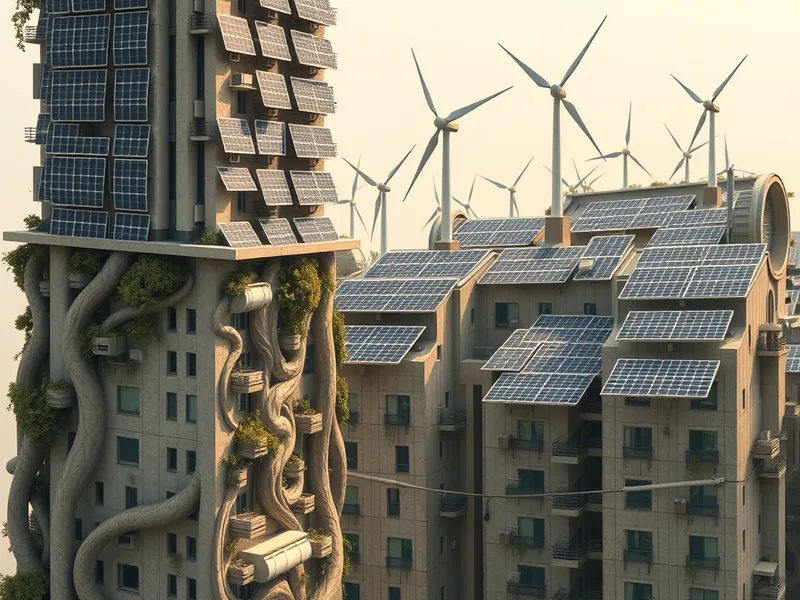
The potential benefits of these prefabricated facades are substantial. By generating their own electricity, buildings can significantly reduce their reliance on fossil fuels, lowering both energy costs and carbon emissions. Additionally, the renewable energy produced by these facades can be fed back into the grid, helping to stabilize local power supplies and support the transition to a more sustainable energy system.
However, there are also risks and challenges to consider. The initial cost of installing these facades may be high, which could deter some property owners from adopting the technology. Moreover, the efficiency of solar panels and wind turbines can vary depending on factors such as geographic location and weather conditions. Ensuring that these systems operate effectively in different environments will require ongoing research and development.
The long-term implications of this innovation are far-reaching. As more buildings adopt these prefabricated facades, the cumulative impact on energy consumption and carbon emissions could be significant. This technology has the potential to transform entire neighborhoods and even cities into self-sufficient, sustainable communities.
Moreover, the widespread adoption of renewable energy technologies in building design could drive further innovation in the field. It may lead to new materials and construction methods that are more efficient and cost-effective, making it easier for more buildings to become energy producers rather than consumers.
The development of prefabricated facades is just one example of how innovative technologies can help address some of the most pressing environmental challenges. By turning buildings into renewable powerhouses, we can create a more sustainable and resilient built environment that benefits both current and future generations.
Tags
Original Sources
About the author
Amara's entry point into AI was an epidemiology role at a London research hospital, where she spent five years studying how digital health tools reached — or conspicuously failed to reach — underserved communities. Watching early algorithmic systems in healthcare quietly entrench existing inequalities, she redirected her career toward the systemic consequences of AI at scale. She covers AI through an unflinching lens: who benefits, who bears the cost, and what evidence actually says versus what the press release claims. Her writing is calm and precise, but she doesn't mistake balance for neutrality.
More from The Steward →This Week's Edition
29 April 2026
29 articles
Related Articles

Nuclear Plants Are Squeezing Out More Power, But It Won't Be Enough to Meet AI's Demand
Environment & Climate · 5 min

The Hidden Environmental Price Tag of Artificial Intelligence
Environment & Climate · 5 min

Iambic Therapeutics Raises $150 Million in IPO to Fund AI-Designed Cancer Drugs
Finance & Markets · 5 min
Related Articles
Nuclear Plants Are Squeezing Out More Power, But It Won't Be Enough to Meet AI's Demand
Environment & Climate · 5 min
The Hidden Environmental Price Tag of Artificial Intelligence
Environment & Climate · 5 min
Iambic Therapeutics Raises $150 Million in IPO to Fund AI-Designed Cancer Drugs
Finance & Markets · 5 min
More Stories
© 2026 Cedar & Bloom. All rights reserved.
